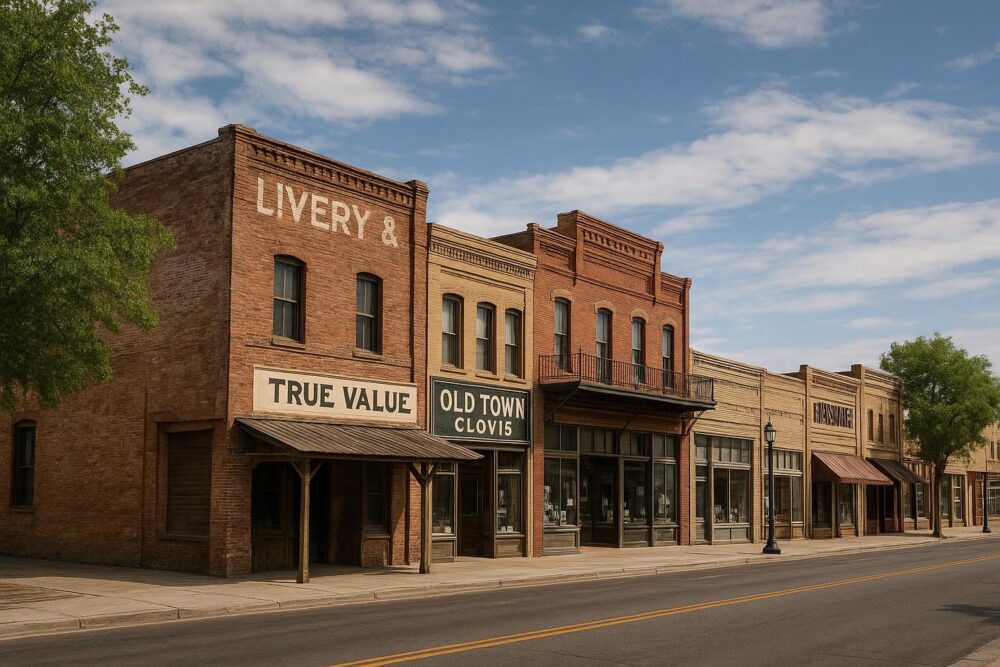
You can still see the railroad dust in the grooves of Main Street if you know where to look. Old signs hang crooked over storefronts. A few buildings have their original brickwork showing through newer paint. That weathered texture is the point: Old Town Clovis holds answers to how a small rail stop folded itself into an agricultural hub and then into a modern suburban center, without quite losing the stories that built it.
## Old Town Clovis History: Unearthing Hidden Layers
If you search old town clovis history, you’ll quickly find variations of the same outline: a railroad stop, hardy farmers, a cluster of entrepreneurs, and a town that grew around daily necessities. But the shape of that story changes when you dig into property records, oral histories, and the graffiti scrawled on a back alley wall. Those details shift the big outline into people and choices. They show how a place like Old Town Clovis kept reinventing itself while carrying the bones of its past.
Start with the railroad. Tracks brought freight and people, and the depot became a hub where news and goods arrived. People built shops facing the tracks because that’s where customers clustered. That orientation still explains why some streets feel angled or why a bakery sits where a warehouse used to be. The railroad didn’t just move things, it mapped the town.
### How Buildings Remember
Brickwork, wood beams, and the odd stamped floorboard are like a town’s memory. Walk into an old storefront and you can often read previous uses in the layout. Tall display windows suggest a mercantile past. Narrow back rooms with hooks hint at meat markets or blacksmiths. These traces are small, but they add up. They are the kind of things that matter when you study old town clovis history because they tell how daily life actually functioned.
The preservation of facades has been uneven. Some owners have protected features for decades. Others replaced them in the 1950s or 70s, and then a newer wave of owners later tried to restore a historic look. That patchwork of decisions is itself a chapter of the town’s story. It shows what different generations valued.
### People Who Aren’t In The Books
Newspapers and city directories list names and businesses, but they miss the details: who taught piano in a back room, who ran a boot-repair stall on Sundays, which families quietly sponsored a temperance meeting. Oral testimony fills these gaps. Local elders will point out a house and say, “That used to be the barber for the farmers,” and suddenly a dry entry in a ledger becomes a living scene.
That’s why clovis history benefits from listening as much as it does from reading. A cassette of a 1970s interview, a teenager’s Polaroid from the 1980s, or a faded program from a 1940 picnic can change how you understand a decade. These artifacts alter timelines and reveal networks—how people traded favors, how civic clubs funded parades, how issues like water access or crop prices influenced where new homes went up.
## Layers Of Commerce And Everyday Life
Old Town Clovis didn’t grow in one tidy sweep. It accreted. First came services that supported the railroad and local farms. Later, as transportation improved, the town expanded retail and entertainment options. Each phase left physical hints.
#### Marketplaces And Main Streets
Main Street in Old Town Clovis once hosted a mix of saloons, general stores, and livery stables. Farmers brought sacks of grain and bartered with shopkeepers who extended credit through tough seasons. Those informal economies mattered more than ledger entries indicate. Credit notes pinned behind counters were a kind of neighborhood social safety net.
When new roads arrived, businesses reshuffled. Car garages replaced stables. Signs advertising rationed goods gave way to neon promoting new brands. These shifts aren’t just aesthetic; they reflect technological and social change in the town’s life.
#### Small Industries, Big Impact
A surprising number of small-scale industries once dotted the area around Old Town Clovis. Canneries processed local produce. Lumber yards provided materials for houses popping up on farmland. Each enterprise supported dozens of families and shaped patterns of migration into the town. Many of these businesses closed or moved as economies consolidated, but their influence remained—in street names, lot sizes, even in the way neighborhoods were laid out.
### Festivals And Public Memory
The town’s calendar became a living archive. Parades, harvest festivals, and rodeos are not mere entertainment. They are public rituals that reinforce identity. Old photographs show different costumes and different floats, but the action is the same: people showing what they value, together. These events often re-centered a community after downturns or disasters. They mattered to civic pride and to local businesses that depended on seasonal crowds.
## Unearthed Documents And New Perspectives
When archives open a box labeled “Old Town,” historians and volunteers often find surprises. Land deeds reveal boundary disputes and chain-of-title fights. City council minutes show arguments over paving streets and installing lighting. Petitions and petitions’ signatures map who cared enough to push for change. These documents let you track public decisions in detail.
A cluster of letters from farmers in one folder could show a campaign to demand better irrigation. A set of building permits signals a boom after a new employer arrives. When you assemble these small items, old town clovis history becomes a web of choices, not just a list of dates.
### The Role Of Women And Forgotten Labor
Traditional narratives often center business owners and politicians, but women ran boarding houses, organized community clubs, taught in small schools, and led relief efforts. Their records are less likely to be formal, so you have to look in church minutes, quilting club notes, or family scrapbooks. Those sources show how essential unnoticed labor was to keeping the town functional.
Similarly, migrant labor powered the fields and demanded infrastructure: housing, schools, and services. Their stories sometimes slip from official histories, but they are central to clovis history. They shaped the rhythms of planting, harvest, and local markets.
## Place Names And Memory
Street names and building monikers are shorthand for memory. Pollasky Avenue is not just a label; it references a founder or notable citizen whose influence stitched the town together. Neighborhoods carry the names of orchards or ranches that disappeared decades ago. When residents refer to “the old orchard” they anchor the present in a landscape that once looked very different.
Understanding toponymy—why names persist, change, or vanish—helps explain how collective memory works. It also shows who gets remembered and who gets effaced.
### Hidden Architecture And Adaptive Reuse
Old structures didn’t always get demolished. Sometimes they were repurposed. A warehouse becomes an art gallery. A bank vault becomes a coffee shop storage. Those choices say a lot about priorities. Adaptive reuse preserves character while allowing contemporary needs. It’s a form of conservation that keeps the town useful and alive.
Adaptive reuse can be messy, though. Not all conversions respect original materials. Some restoration attempts are superficial. Yet, even imperfect reuse often leaves open the possibility of later, better preservation.
## Conflict, Law, And Local Power
Disagreements over resources shaped Old Town Clovis as much as friendly cooperation. Water rights, zoning decisions, and tax disputes forced residents to take sides. These conflicts appear in court records and slow-burning debates in municipal meetings. They also show how land use and development pressures created winners and losers.
Local politics often hinged on practical concerns: a new well here, a paved street there. Those debates are less glamorous than headline events, but they determine the shape of daily life. They decide which neighborhoods get streetlights and which ones get left behind.
### Crime, Safety, And Vigilance
Old newspapers often carried short notices of petty crimes—items stolen from a general store, or a brawl outside a saloon. Those snippets reveal social tensions and how a town policed itself. Neighborhood watching, volunteer fire brigades, and informal mediation were common. Public safety evolved with changing technologies and attitudes, moving slowly from a community-maintained order to a more formalized police force.
## Preservation Efforts And Local Tensions
Historic preservation is rarely unanimous. Some residents want strict rules to keep facades intact. Others argue that regulations make renovation too expensive or limit property rights. That debate is part of the story. When Old Town Clovis adopted zoning overlays or historic district rules, it reflected a choice about what future the town would honor.
Preservation doesn’t freeze a place in amber. It’s selective. Which years and which styles do people choose to celebrate? Often preservation focuses on an era seen as romantic. That preference tells you as much about current tastes as it does about the past.
### Museums, Markers, And Interpretations
Small museums, plaques, and walking tours mediate history for the public. They curate what’s important. That means some histories get spotlighted while others remain on the margins. A plaque commemorating a depot opening is easy to read. A small exhibit on migrant labor might require more effort to present. Both are necessary, but they rarely receive equal attention.
Interpretation is also an argument. Deciding what to highlight requires negotiation between historians, civic groups, business owners, and descendants. Those negotiations produce the narratives people come to believe.
## Hidden Landscapes: Cemeteries, Orchards, And Back Alleys
Cemeteries record names and dates but also reflect epidemics, migration waves, and family networks. Orchards once covered ground that is now parking lots. Back alleys hide traces of small trades, from metalworking to laundry services. These spaces are quieter than the main thoroughfares, but they hold stubbornly intact clues about who lived where and why.
Parks sometimes overlay older land uses, and when a park board digs to install a foundation, they may find artifacts. These discoveries shift perceived boundaries between past and present.
### What Archaeology Adds
Archaeology in a town like Clovis doesn’t mean dramatic digs. It often means careful shovel tests and the patient cataloguing of ceramics, bottle fragments, and nails. Those objects tell everyday stories: what people ate, what they imported, when a neighborhood updated its goods. Material culture fills in gaps left by written records.
Archaeological finds frequently change narratives. A shift in ceramic types may indicate a new trade route or a change in income. A cluster of broken plates might mark a household’s end. These mundane items make the past specific.
## Why These Stories Matter Today
Old Town Clovis is not just a preserved set piece. It’s a living place shaped by cumulative decisions. Knowing old town clovis history gives current residents leverage. They can argue for better planning, wiser reuse, and respectful growth. They can insist that development honors communal memory rather than erases it.
When developers propose a new project, local history can inform design choices—where to place a building, which materials to favor, how to engage the community. History here is practical. It helps people decide how to balance new needs with the traces of what came before.
You’ll hear residents say they want authenticity. That’s a slippery word. But a chunk of authenticity is simple: respect for ordinary traces. Keep the brick, reuse the beams, listen to the older neighbors’ stories. Small moves like that accumulate.
A final anecdote: A volunteer found a bundle of letters behind an old counter slated for a café renovation. The letters documented a contest for a centennial parade float and included a list of names that matched the town directory from eighty years earlier. Those letters were donated to the historical society and now serve as a resource for genealogy and local programming. It was a modest find. Yet it changed the way a single block told its story.
Old town Clovis history is full of these modest revelations. They don’t always make the glossy pages of statewide histories, but they define how a place feels when you stand on its sidewalks and listen. And they remind you that towns are made up of layers—some visible, some barely there, all worth noticing if you want to understand how communities endure and change.