Clovis grew because trains made it useful. A stop that could unload grain, feed, and people turned into a place where stores, homes, and schools clustered. The rails didn’t invent the valley’s fertility, but they turned remote fields into markets and turned small settlements into towns.
## Clovis Railroad History: Tracks That Shaped Fresno
The simplest way to read Fresno’s expansion is to follow the rails. Clovis began as one of several sidings and depots that served the agricultural hinterland. That is the core of the clovis railroad history: a pattern repeated across the Central Valley where a few miles of track decide whether a place becomes a handling point or remains a farmstead.
By the 1890s and early 1900s, trains were hauling wheat, fruit, dairy products, lumber, and the odd passenger. When a depot went up, a blacksmith and a feed store followed within months. People who had been hesitant to move for work suddenly had reliable shipping and a weekly passenger option; families could visit Fresno proper and farmers could sell perishable goods further afield. Those small logistical shifts explain most of the difference between scattered homesteads and the clustered neighborhoods that define modern Clovis.
### How The Line Altered Local Commerce
Freight schedules shaped business hours and land values. Grain elevators and loading platforms became local landmarks. A grower who once needed a wagon and a day to reach market could now load a boxcar in an hour and have his produce on its way the same day. That immediacy let farmers specialize more confidently. You can trace a shift in crop patterns in county records: more orchards and dairies, fewer subsistence plots.
When the clovis railroad made shipments predictable, merchants started investing in inventory. General stores stocked goods for a wider geographic market. Local labor shifted too—men who used to work the fields part of the year found off-season steady work in warehouses and on the rails. It’s the kind of economic ripple that looks small until you compare tax rolls over a decade.
### Stations, Streets, And Settlement Patterns
Stations became civic anchors. Streets were plotted to feed the depot rather than the courthouse. Residential lots near the tracks filled first; further lots waited. Over time, businesses that relied on daily truck traffic set up along those early commercial corridors, reinforcing the original pattern. You can still see it if you walk the old downtown: building facades oriented toward the former loading platforms, alleys that made sense for wagons and freight, a grain elevator silhouette against the sky.
#### The Depot As Social Hub
Depots hosted more than freight. They were where news arrived, where arriving relatives were hugged, where the town clock often stood. When service changed or reduced, towns felt it immediately—not just economically but socially. Those losses matter when you think about civic identity.
## Clovis Rail History In Public Records And Memory
Local archives and newspaper clippings preserve a lot of the clovis rail history: shipping manifests, timetables, and photographs of long trains stretching past cottonwood trees. Oral histories matter here too. Farmers’ grandchildren still tell stories about hopping boxcars for a Saturday visit to Fresno or about the man who fixed locomotives in a shed behind Main Street. That mix of paperwork and memory helps explain why rail infrastructure stays visible in a town’s layout decades after the last steam engine.
Public works and zoning decisions were driven by rail patterns as well. Where tracks ran, roads later followed. Where tracks were removed, the void sometimes became a trail or linear park. In other spots, the right-of-way sat unused and nagged at planners until redevelopment projects gave it new life. That sequence—active rail, decline, adaptive reuse—shows up across the clovis rail history and in Fresno’s broader planning plays.
### Political Choices And Private Investment
Railroads didn’t operate in a vacuum. City councils, county supervisors, and private landowners negotiated station sites, right-of-way purchases, and spur lines. Incentives for sidings or promises of volume could tilt a company’s decision. When the rail company wanted to avoid a costly curve, a town might pay for grading. Those negotiations are where policy and profit touched, and where local growth choices got locked in.
#### Infrastructure Remnants And Reuse
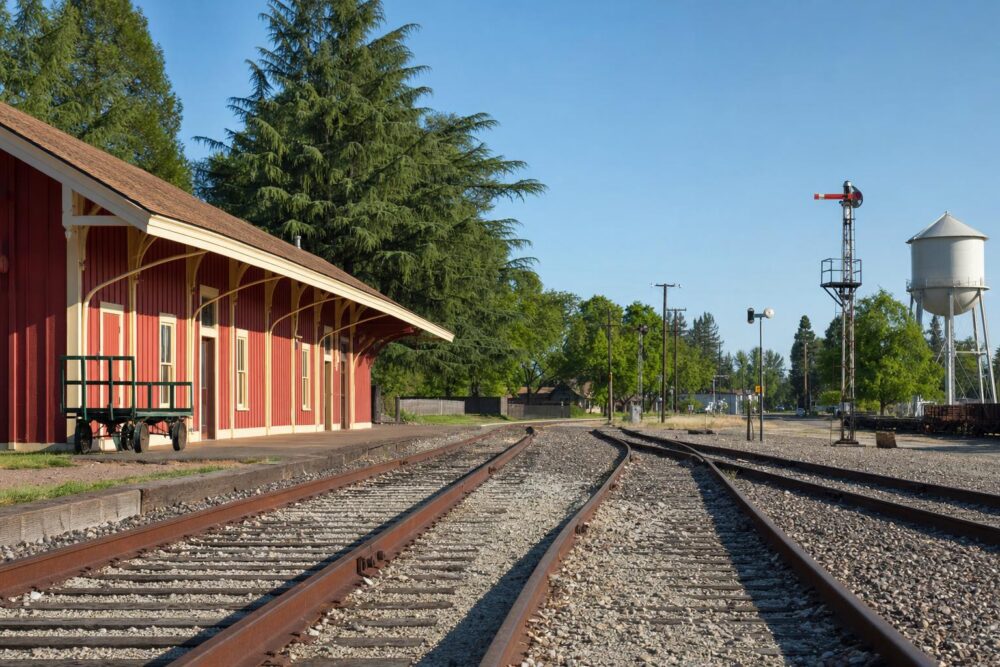
You still find relics: a rusted signal here, a bridge that now carries a bike path there, warehouses converted into breweries or studios. Those pieces are not just aesthetic—they’re practical. Repurposing a depot can anchor a neighborhood revitalization, and a former rail corridor can become a green spine through a city.
The clovis railroad history is useful because it’s specific. It ties patterns—migration, land use, commercial clustering—to concrete decisions: where a track was laid, where a depot stood, who agreed to build a spur. You can argue about broader causes of Fresno’s growth, but follow the rails and the story reads like a map.
Even now, investment decisions echo those earlier choices. Developers look at former station areas and see walkable density. Planners study old timetables to understand freight demand. And residents who grew up watching trains pass on summer evenings still mark their routines around those moments, a small but persistent cultural thread in teh city’s fabric. Somewhere in the county archives, a ledger with a stub marked “received” and a line item for a commision payment tells the plain financial story beneath the romance.