## Friant Dam And Canal History: How It Shaped Fresno
The valley east of Fresno still runs on choices made nearly a century ago. The Friant project turned a wildly seasonal San Joaquin River into a managed water system. It re-routed water, remade farms, and rewrote local politics. The phrase friant dam and canal history isn’t just trivia; it’s the pattern behind who grows what, where neighborhoods get water, and what stretches of river run dry for miles.
You can see evidence of that history in everyday things: orchards that used to be dusty plains, neighborhoods that tap groundwater instead of surface water, and a reservoir rim where a courthouse once stood. The Friant story is physical and legal and cultural, and it’s still unfolding.
### Where The Idea Began And Why It Mattered
Before the dam, the San Joaquin River behaved like most mountain-fed rivers in California: big spring runoff, low summer flows, and frequent floods when storms hit the Sierra. Farmers and towns downstream lived with that rhythm. They also suffered from it. Without storage, years of plenty didn’t prevent years of drought.
The federal Central Valley Project was conceived to tame and redistribute those flows. Building the dam at Friant and linking it to canals was seen as a way to take high-season runoff and move it to the lowlands when crops needed it. The engineering answer was straightforward. The politics and consequences were not.
#### The Dam, The Lake, And The Canals
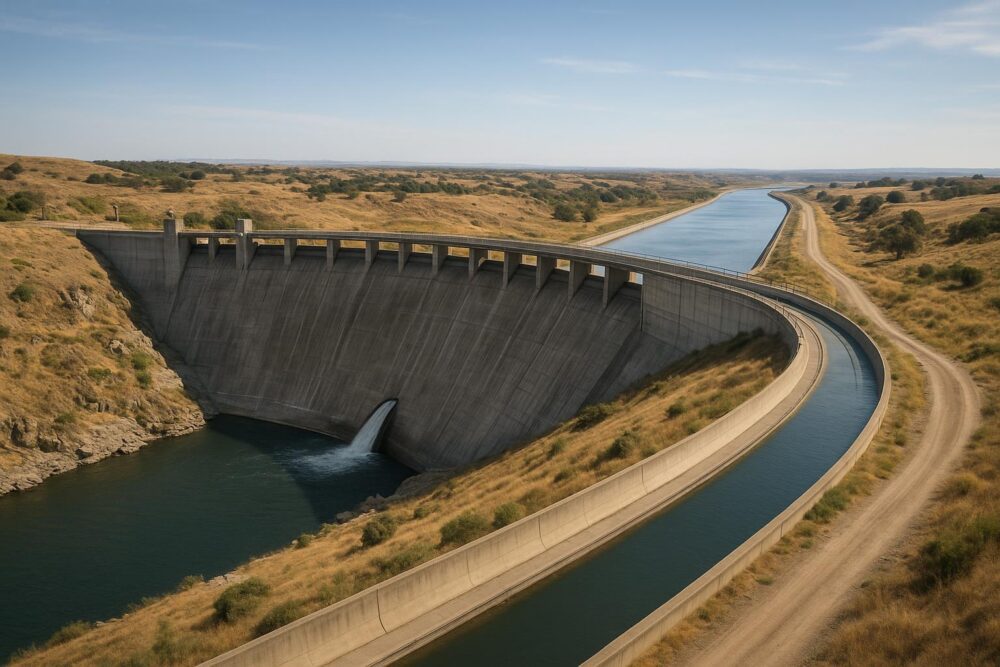
Millerton Lake behind Friant Dam became a buffer. From that buffer two major arteries carry water into the southern and northern reaches of the valley. The Friant-Kern Canal heads south into the Tulare Basin and supplies thousands of acres of farmland. The Madera Canal heads north and serves districts that used to rely more on direct river diversion. Those canals are the veins that transformed the landscape.
This part of friant dam and canal history is about plumbing: how much water could be moved, where it could be delivered, and at what cost. Pipes and concrete make it possible to grow citrus and grapes where before only seasonal grazing made sense. But plumbing also creates winners and losers. Some communities saw agricultural booms; others watched the river below the dam shrink to a set of isolated pools.
### The Early Years: Building And Immediate Aftermath
Construction brought jobs and concrete. Workers carved the river canyon, erected the dam, and filled the basin. A whole town—Millerton—ended up under the reservoir. The lake and dam became landmarks, and they changed local economies quickly. Land values shifted as irrigation water became possible, investors moved in, and orchard culture spread.
The immediate aftermath was predictable in one way and surprising in another. Predictable: irrigation expanded and production jumped. Surprising: the environmental and social effects were sharper and more lasting than many anticipated. A river that had been a salmon run for millennia was abruptly interrupted, and the communities that had depended on those seasonal flows were left to rethink livelihoods.
### Freighted Waters: Rights, Contracts, And The Shape Of Use
Water law in California is complex and often bitter. The Friant system added another layer. Contracts with irrigation districts, allocations to cities, and federal priorities carved up the reservoir’s yield. Over time, contractors and districts negotiated to buy and transfer water rights, and the system shifted from a public infrastructure built for multiple uses into something that often operates like a commodity market.
That legal choreography shows up in the plumbing. Release schedules from Friant Dam depend on contracts and environmental obligations. When farmers need water in summer, the canal system moves it, but when environmental mandates require pulse flows down the river, those deliveries can be reduced. The tensions are longstanding and recurring.
#### The San Joaquin River Restoration Program
One of the most consequential pieces of modern friant dam and canal history is the effort to restore a portion of the San Joaquin River to meet ecological obligations. Decades of reduced flows below the dam devastated salmon and other native species. Lawsuits and negotiations culminated in a settlement that required increasing flows and taking concrete steps toward reestablishing fish passage and habitat.
Restoration changed operational priorities. Flows that once went straight into agriculture were now scheduled, at least in part, to bring back a fishery. That rebalancing didn’t erase the canal system’s importance, but it added constraints and spurred creative solutions like habitat restoration, managed releases, and coordinated groundwater recharge.
### The Canals: Engineering, Subsidence, And Repair
Canals look permanent until they don’t. The Friant-Kern Canal was built to carry a predictable volume of water. Over decades, the land beneath parts of the canal sank—sometimes many feet—because of heavy groundwater pumping in the Tulare Basin. The result: sections of canal lost the cross-sectional capacity they were designed for. Deliveries dropped, and the system could no longer move water the way it used to.
Repairing that damage has become a major chapter in friant canal history. Engineers raised sections of the canal, lined others, and adjusted pumping schedules. Those fixes cost money and took years of planning. They also forced a reckoning about groundwater management. Conjunctive use—using surface water to recharge aquifers in wet years so they can be tapped in dry years—moved from the theoretical to the practical.
### Farmers, Cities, And A Changing Demand
It’s easy to picture the Friant works serving only agriculture, but urban growth in Fresno and neighboring towns has gradually altered demand. Cities push for reliable supplies for residents and industry. Farmers want certainty for cropping plans. The old distinctions between “agricultural water” and “urban water” have blurred.
Where once water deliveries were measured in acre-feet to irrigation districts, today transfers, temporary sales, and municipal contracts are routine. Water that used to be locked into long-term agricultural use sometimes shifts to urban supply, or is sold in dry years. That market fluidity is part of modern friant dam and canal history—markets and negotiations now sit alongside pipes and pumps.
#### The Human Cost Of Shifts
Irrigation transformed landowners’ opportunities, but it also created vulnerability. When deliveries are cut—because of drought, legal obligations, or infrastructure limits—farmworkers and small farmers often feel the impact most. Whole local economies depend on the combination of surface deliveries and groundwater pumping. Those dependencies take time to unwind and can be politically explosive.
### Recreation, Heritage, And The Submerged Past
Millerton Lake is both a working reservoir and a recreation spot. Boating, fishing, and camping draw people into the foothills. At low lake levels, the ghostly outline of old foundations appears, reminding visitors there was a different life before the dam. The region’s history is preserved in small ways: an old courthouse here, a plaque there, a family story about moving a house before the water rose.
That cultural layer matters. It shapes how communities talk about trade-offs and what they are willing to accept. People who grew up with the dam take for granted the crops and the jobs it enabled. Others measure their relationship to the river by what it used to provide before storage and diversion became dominant.
### Modern Challenges: Climate, Drought, And Policy
Climate variability throws new problems at old infrastructure. Snowpack shifts, earlier runoff, and more extreme storms mean storage and delivery decisions must adapt. Millerton Lake holds a buffer, but it’s a finite one. Warmer winters can mean less prolonged snowmelt and more runoff concentrated in shorter windows. That’s a management problem for Friant just as much as for the rest of the CVP.
At the same time, regulatory pressure and public expectations have changed. Environmental laws demand that flows support native fish and ecosystems. Local and state policies push for sustainable groundwater use. Those constraints add layers of complexity to a system built for a different era.
### Local Responses: Recharge, Rotations, And Cooperation
A lot of the practical work today is about doing more with less and coordinating across jurisdictions. Groundwater recharge projects—pumping canal water onto floodplains or recharge basins in wet years—help restore aquifers that were overdrawn. Crop rotations and fallowing programs can reduce peak demand. Water districts trade or lease allocations to smooth shortages.
These are not glamorous moves. They’re technical, negotiated, and sometimes politically awkward. But they illustrate how friant canal history moves from an engineering tale into a story about management choices. The decisions made in boardrooms and in farmers’ fields matter as much as the dam itself.
#### Collaboration Has Limits
Cooperation helps, but it doesn’t remove the hard choices. When you increase flows for fish through a restored stretch of the San Joaquin River, less water might be available for irrigators that season. When the canal loses capacity from subsidence, everybody feels the pinch. Those trade-offs create ongoing tension.
### The Role Of Science And Monitoring
Science plays a bigger role than it did in the 1940s. Monitoring programs track fish populations, water quality, and flow volumes. Models project how climate shifts may alter runoff schedules. That data influences management decisions and legal compliance.
But data alone doesn’t settle disputes. It frames them. Two parties can look at the same numbers and reach different conclusions about what is reasonable. The technical work behind the scenes—flow schedules, fish ladder design, canal lift projects—often gets less attention than the headlines but is where much of the friant dam and canal history gets written.
### A System Of Trade-Offs, Not Perfection
The Friant system was never going to be perfect for everyone. It solved a core problem: how to take highly variable mountain runoff and make it useful during the irrigation season. It did that successfully. But success came with costs: diminished riverine ecosystems, social displacement, and a legacy of legal conflict.
Today’s story is about adapting that infrastructure to new realities: balancing ecological restoration with agricultural need, repairing aging canals, and managing groundwater sustainably. Those are practical tasks, not moral dilemmas with obvious answers. Decisions get made through negotiation, engineering, and law.
### Small Stories That Reveal Big Shifts
If you want to understand the larger dynamics at play, watch a water district meeting or visit a recharge basin on a rainy spring day. Watch a canal gate open and a field green up. Talk to a grower who switched from almonds to a less thirsty crop because the economics changed. Those small observations ground the larger narrative of friant canal history and what it means for people in Fresno County and beyond.
The river, the dam, and the canals are infrastructure you can see. They also connect to the less visible systems: contracts, groundwater, and community memory. Together they form a legacy that continues to be negotiated in everyday decisions about water use and policy.
### What Engineers And Planners Keep Coming Back To
There’s a pattern in the planning documents: diversify supply, increase flexibility, protect ecosystems where feasible, and repair aging infrastructure. That is practical, not poetic. It’s also expensive and politically tricky.
Projects on the table range from lining additional canal sections to expanding recharge networks and revising allocation rules. Each action alters flows and incentives. That’s the essence of friant dam and canal history—each technical decision ripples outward into farms, rivers, and towns.
### A River With Memory
The San Joaquin remembers what it was. Salmon runs are part of that memory. So are the old towns and the families who lived before the dam. The landscape keeps those traces and sometimes reveals them—when the lake goes low, when a foundation appears, when fish return. Those moments are reminders that infrastructure sits in a living system, and that history keeps shaping options for the future.
You don’t have to romanticize the past to respect it. You can acknowledge both the gains from irrigation and the costs to ecosystems and communities. That kind of honest accounting is a practical starting point for whatever comes next in the friant dam and canal history.
### How This History Shows Up In Everyday Decisions
Farm planners look at projected deliveries when they decide what to plant. City water managers map transfers to cover dry years. Conservation groups watch flow schedules and challenge them in court when necessary. All these actors draw on the same physical system but interpret its meaning differently.
Those decisions will continue to write the next chapters. Repairs will be funded; flows will be negotiated; laws will be tested. Each choice will add another layer to the friant story, and each layer will affect the people and places that depend on the system.
### A Legacy Still Being Lived
The dam and the canals were built to control variability and expand opportunity. They did. They also introduced new kinds of variability—legal, ecological, and political. The work now is less about building a single grand project and more about managing a living system in which people, plants, and fish all intersect. That’s less tidy. It’s also more honest.
If you visit the valley, you can see this history in groves, in a reservoir shore, and in meetings where water managers haggle over allocations. The story of friant canal history and the dam is not finished; it’s actively being written. The decisions of the next decade will matter as much as the decisions of the last one. They will determine who benefits, who bears the cost, and how the river’s memory gets honored in practice.