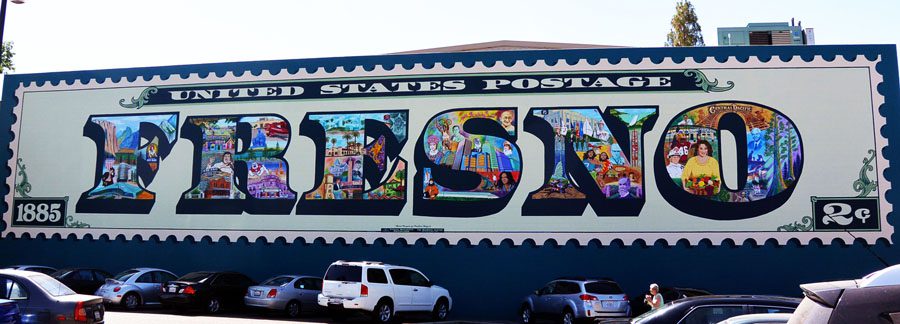
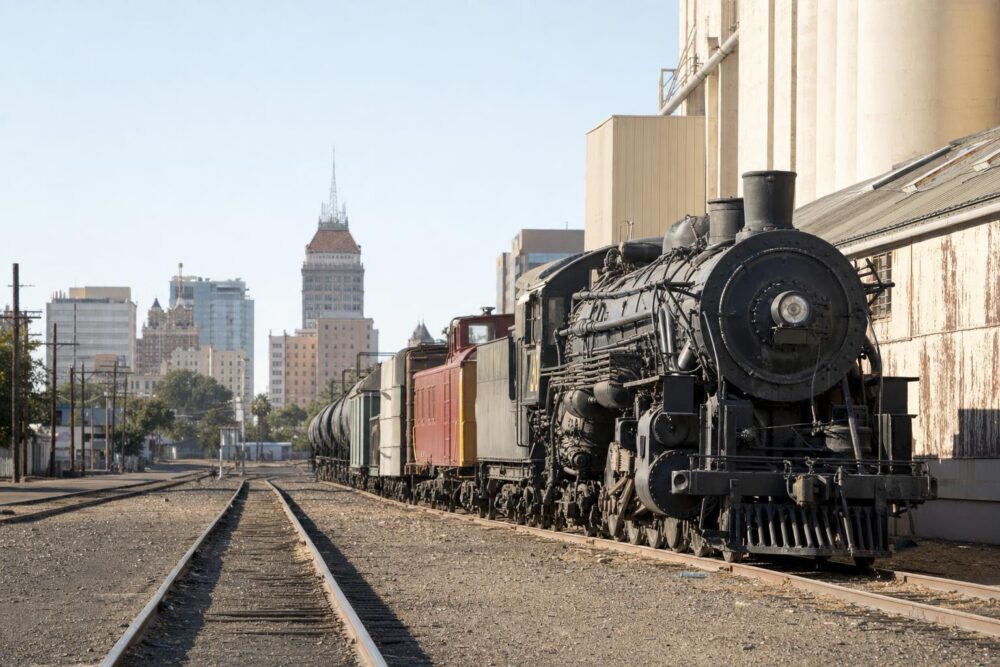
Fresno’s pattern of streets, industry, and neighborhoods follows the tracks more than most people notice. The railroad didn’t just arrive here; it arranged the city, and the way Fresno grew still shows the seams.
## San Joaquin Valley Railroad History And The City Grid
The san joaquin valley railroad history is visible as soon as you stand on a corner and look toward the railyard. Tracks carve efficient, straight corridors through an otherwise messy sprawl. In the 19th century, raillines decided where farms sent produce and where warehouses clustered. Those decisions pushed Fresno toward the industrial parts of town and left residential areas branching out around them. That spatial logic is old, but its effects are very present.
### How Tracks Directed Industry And Housing
Freight lines make predictable edges. When a rail company chose a depot site, merchants and cold-storage facilities followed. Workers’ housing cropped up within walking distance. Over decades, those nodes became neighborhoods with schools, shops, and churches that oriented toward the tracks. This is the core of fresno rail history: not a single event but a pattern of choices that accumulated into the city’s shape.
Farmers in the valley needed a reliable way to reach San Francisco and Los Angeles markets. Railroads provided that speed and scale. So orchards, vineyards, and later packing plants located where a spur line or siding was available. When highways arrived, they layered over a map already drawn by rail. You can still trace older property lines and lot sizes back to where rail access existed first.
### Short Lines, Big Effects
The san joaquin valley railroad history isn’t only about the big transcontinental roads. Short lines and branch lines mattered just as much. Those smaller carriers connected remote packinghouses to mainlines, and their survival often meant a town could keep its industry. In some cases, when a major railroad shed low-density branches, short-line operators stepped in and kept rail service alive. That continuity preserved jobs and kept freight moving, which in turn influenced local develpment patterns. The people who ran those lines often had to be inventive — shifting schedules, renegotiating track rights, and working directly with shippers to keep traffic flowing.
#### The Role Of Rail Infrastructure In Modern Growth
Tracks, bridges, and yards also create constraints. A railyard is a barrier; it concentrates heavy freight but separates neighborhoods. When Fresno later planned expansions — new roads, schools, even housing projects — decision-makers had to reckon with existing rail infrastructure. That’s why you see industrial corridors hugging the rail and residential growth pushed to the east and west. The san joaquin valley railroad history is literally embedded in the contours of current planning debates when officials discuss where to add transit or mixed-use developments.
### People Who Shaped The Lines
Railroad history is not only about steel and timber. It’s about engineers, switchmen, brakemen, and the families who built lives around schedules and whistle signals. Local shops sprung up to service locomotives. Labor disputes and union activity left marks on community institutions. You can talk to long-time residents who remember freight cars lined up along Main Street or children playing near sidings before safety rules tightened. Those memories matter when you try to understand why a neighborhood developed the way it did.
#### Freight Types That Built Fresno
Grain, fruit, packing materials, and later, manufactured goods — the cargo mix influenced track layout. Perishable goods required quick access to refrigerated cars and prompt routing to markets. That need led to certain facilities being colocated, which in turn attracted related businesses. Fresno’s economy deepened around those clusters. When demand shifted, some lines lost traffic and were abandoned; others adapted. These shifts are core to san joaquin valley railroad history and to the local economy’s resilience.
### Preservation, Reuse, And The Present-Day Debate
The city now faces choices about old rail corridors: leave them for freight, reuse them for light rail, or convert them into linear parks and trails. Each option carries trade-offs. Preserving active freight corridors supports the logistics sector but can hinder pedestrian connections. Repurposing unused lines can stitch neighborhoods together but risks losing freight capacity. These are practical decisions grounded in the long arc of railroad history, and they require negotiating with private carriers, local businesses, and residents who have recieved both benefits and burdens from the tracks.
### What To Watch Next
Planning conversations often circle back to infrastructure investment. Upgrading aging crossings, improving signaling, and negotiating quiet zones all change daily life. You’ll hear engineers talk about capacity; you’ll hear activists talk about neighborhoods. Both sides draw on the same record: railroad history that has shaped land use, property values, and where jobs cluster. For Fresno, ackowledging that past is the only way to make coherent choices about transit, industry, and housing going forward.