## Sunnyside Fresno Neighborhood History Through Its Streets
Walk Sunnyside and you see history in small things: a cracked concrete mailbox from the 1940s, a backyard citrus tree shading late-afternoon laundry, a corner store that still puts paper cups of coffee on the counter. Those details carry weight. They tell a version of the sunnyside fresno neighborhood history that city reports and parcel maps don’t fully capture.
## Roots: Before Homes And Highways
The land that became Sunnyside sat where people managed water carefully for a long time. Yokuts families lived and traveled across the central valley for generations; their trails and seasonal camps were woven into the landscape long before subdivision lines were drawn. After American settlement took hold in the late 19th century, irrigation and the railroad opened the valley to orchards and vineyards. Those orchards are the quiet origin story of the area we now call Sunnyside.
Farm-to-market roads mattered here. Folks planted figs, grapes, and citrus because the soil and long summers made it practical. Barns and packing sheds rose where there are now front lawns. When the first bungalows appeared, they often sat on lots that had been cleared only a decade earlier. That layer of agriculture under the suburb is one reason the soil surprises homeowners with odd bits of broken pottery and old nails when they dig for a new fencepost.
### Neighborhood Development Through The 20th Century
After World War II, the city’s edges spread. Salaries from wartime factories and GI loans backed a lot of new construction. Sunnyside history, if you trace permits and aerial photos, shows a burst of building in the late 1940s and 1950s—modest ranch houses, some Craftsman holdovers, and a few Spanish-style roofs. The postwar boom didn’t just add houses; it remade daily life. Car ownership rose, kids walked to different schools, and the local grocery shifted from weekly full-cart runs to more frequent stops.
City planners and developers marketed the area with pictures of young families and promises of modern conveniences. Local churches and service clubs moved in quickly to fill the social gaps: potlucks, baseball leagues, booster nights. Those organizations still shape parts of the community. If you follow the civic calendars, you’ll see the same names and fundraisers recur, a kind of institutional memory that keeps sunnyside history present.
## Streets, Schools, And Small Businesses That Kept The Place Afloat
Streets tell stories here. Some were laid out in tidy grids, others follow older farm lanes. A few pockets kept mature trees that predate the houses; those oaks and sycamores are landmarks in a neigborhood where new construction otherwise erases the past. The commercial strips are modest—hardware, barber, a taqueria that’s been family-run for decades. Those storefronts made the neighborhood habitable in ways that ankle-deep convenience stores and big-box malls never could.
Local schools were anchors. Schoolyards became meeting places; PTA bake sales helped fund band uniforms and playground equipment. Teachers who stayed for a generation became local fixtures. Talk to a long-time resident and they’ll usually point to a particular teacher or coach and say, “They made Sunnyside what it is.” That memory is a piece of the sunnyside fresno story that planning documents can’t quantify.
### Housing Styles And The Material Past
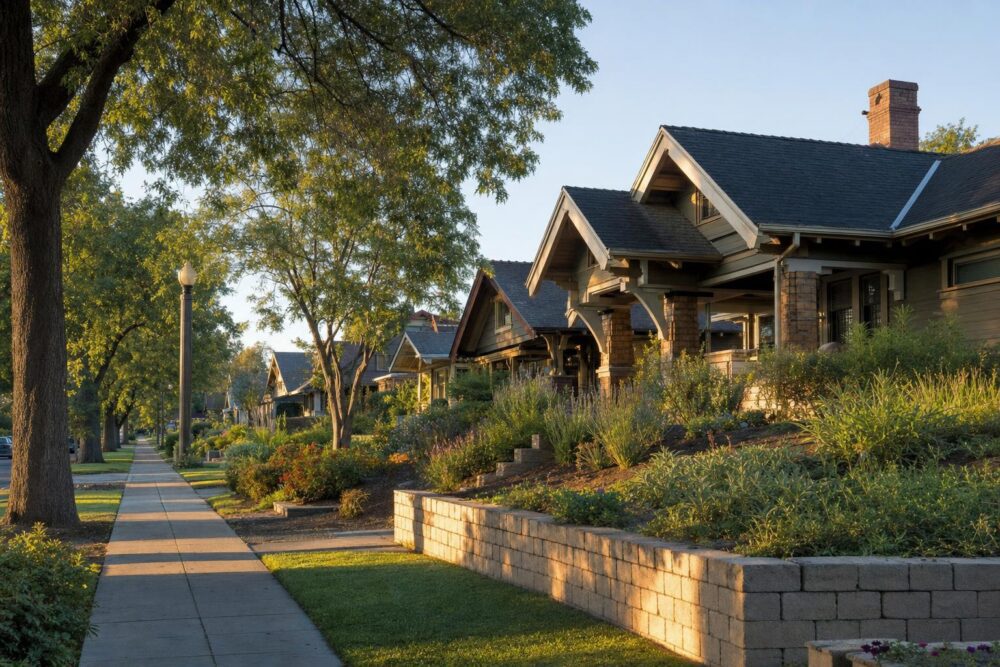
If you want to read the area’s history from its houses, look for the mix. There are 1920s bungalows with broad porches and exposed rafters. Mid-century ranch homes have low profiles and carports. Some owners have remodeled over the years, but neighborhood surveys can still tell an era by rooflines and window styles. Where a Craftsman persist, you often find original built-ins and the kind of porch post that hints at carpenter pride.
Later infill tends to be bigger and more vertical. That shift has caused tension: families want space and modern layouts, while preservation-minded neighbors argue for retaining the block’s original cadence. The push and pull shows how sunnyside history is a living thing, not a closed book.
## Community Memory: Oral Histories And Local Lore
Official archives hold maps and dates; the human stories live with residents. One woman I spoke to remembers her father hauling crates of table grapes to a packer on a hot August morning, then coming home for an afternoon nap under the fig tree. An elderly man near the park can still point to the precise spot where a walnut orchard gave way to a playground. Those memories are fragile. They live in family photo albums, in church bulletins, and in the occasional garage-sale box of documents.
Local newsletters and block parties do a lot of preservation work by accident. When neighbors display old photographs at a festival, younger residents ask questions. That curiosity matters. It’s how a street name or a faded sign becomes a story again rather than a forgotten detail. These conversational archives are one reason the sunnyside history continues to matter to people who weren’t around when the first houses were raised.
#### Civic Battles Over Zoning And Change
Sunnyside didn’t change only through steady growth. It also changed through argument. Zoning battles over the years have decided whether a corner lot keeps its single-family home or becomes a duplex. Parking debates and noise complaints sometimes mask deeper concerns about identity. When developers propose denser housing, older residents often worry about traffic and trees; newer residents point to housing shortages and argue for efficient use of space. Those fights are part of the narrative. They show how community values contest one another and how policy decisions imprint themselves on daily life.
## Public Spaces, Parks, And Where People Actually Meet
Parks are where history becomes present. A small park bench might be the scene of three generations of birthday parties. Community gardens—started by volunteers a few years back—are now reliable sources of fresh vegetables for local families. The way people use public spaces has shifted: once dominated by weekend leagues, parks now host yoga classes, food trucks, and even pop-up markets. Those activities reveal changing demographics and tastes.
Transit shaped patterns, too. Commuting has always mattered in sunnyside fresno. Where transit stops were once spaced for shorter, more frequent trips, modern car dependence stretches daily movement farther. That pattern affects where new businesses locate and which corners stay lively after 6 pm. Neighborhoods are ecosystems that respond to these small logistical shifts.
### The Role Of Churches And Social Institutions
Churches and lodges provide continuity. They host food drives, counseling sessions, and emergency response when floods or freezes hit. In many ways, these organizations act as informal social services before municipal programs step in. They also produce local history in tangible form: plaques, memorial gardens, and handwritten minutes that tell who showed up and what mattered in a given year. That administrative record is small but durable.
## Preservation, Renovation, And The Pressure Of New Development
People renovating older homes often face practical choices: maintain original wood windows or install low-maintenance vinyl; keep a period-appropriate fence or go modern. These choices ripple across neighborhoods. Where too many houses are modernized in incompatible ways, the historic fabric frays. Yet some renovation can rescue a house from decay. That middle ground is the most common reality.
Economics push decisions hard. Property taxes, renovation costs, and the price of new material make preservation more complicated than nostalgia. Neighborhood organizations have tried to create toolkits for sympathetic renovation—advice sheets, lists of recommended contractors, even small grant programs. This pragmatic approach recognizes that sunnyside history needs stewardship, not sanctimony.
#### Cultural Shifts Reflected In Food And Commerce
Walk the commercial corridors and you can chart immigration and cultural change through menus. New restaurants bring new cuisines; older diners adapt to new tastes. Grocery shelves fill with products that would have been hard to find two decades ago. Those small changes to what people eat tell a larger story about migration, family networks, and economic integration. The result is a living culinary map of sunnyside fresno that ties into broader migration patterns in Fresno County.
## Oral Histories Matter For Future Planning
City planners can map sewer lines and calculate density, but they often miss nuance: which corners have sentimental value, where the community plants the largest tree, which crosswalks kids use even if the map doesn’t note them. Collecting oral histories and encouraging local submissions to the city archives helps. Sometimes a single narrative—an account of a neighborhood parade or a teacher who stayed decades—shifts how officials think about a preservation district.
There’s no escaping change. But when plans incorporate lived experience, they become less brittle. They can protect things that matter without freezing neighborhoods into museum pieces. The balance matters because sunnyside history isn’t only the past; it’s the instructions for how the place adapts.
## A Sense Of Place That Keeps Evolving
If you read the chain of ownership on old deeds, you’ll find patterns: a lot sells from a farmer to a developer, to a young couple, to a single parent juggling two jobs, to retirees who love the shade. Each transfer adds a layer. That cumulative layering is the essence of the sunnyside history. It’s not a single narrative but a chorus of small stories about work, weather, and family life.
The next generation writing sunnyside fresno neighborhood history will do so with different concerns—climate stress, digital connectivity, and new forms of community organizing. But they’ll still sit under the same trees, walk the same sidewalks, and argue about yard setbacks. Those continuities matter. They keep the place real, messy, and worth paying attention to.
Keep an eye out for small markers: a faded grocery sign, a sidewalk crack where kids once chalked hopscotch, an old fence post with initials carved into it. Those are the pages of a book most cities never publish. If you want to understand the sunnyside history, you don’t need every zoning map. You need to listen, ask questions, and turn over a little earth in your own backyard. That’s where the stories tend to be buried—right under your feet, waiting to be found.