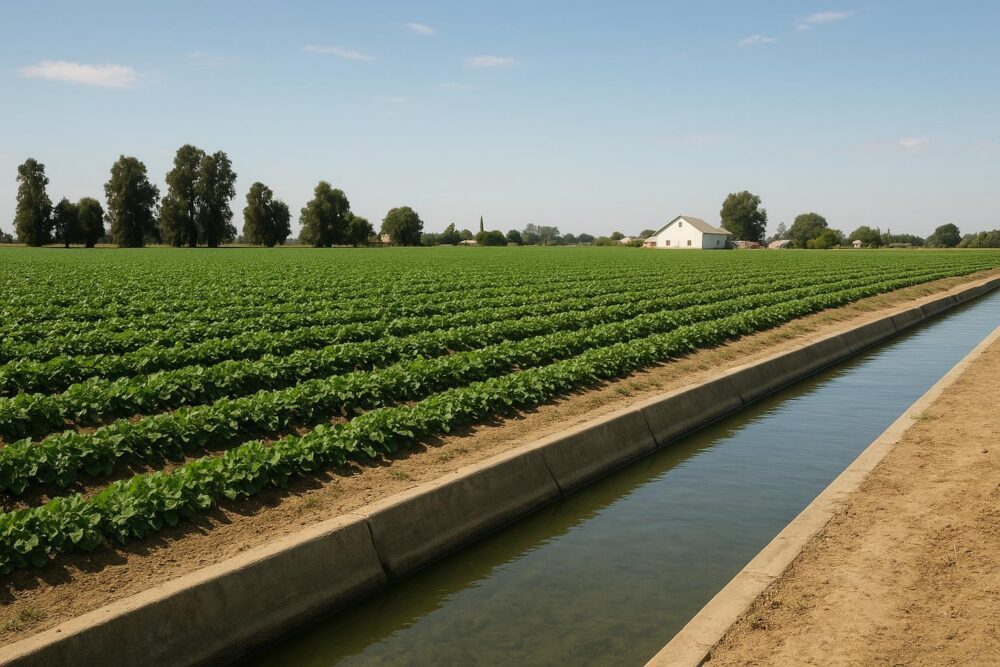
## Central California Colony Irrigation History: How Water Shaped A Community
People forget how physical the past is. In the San Joaquin Valley the past is trenches, gates, and orchard rows. The central california colony irrigation history is not a single event but a series of adjustments: ditches cut by hand, canals deepened by steam, rules fought over in county seats. Those details still determine who farms what, and where houses stand, even now.
### Early Settlement And The Practical Start Of Irrigation
When settlers first came into the region that would be called the Central California Colony they found flat land and a fickle climate. Rain arrived in winter; summers baked it away. Crops without steady water failed. So the earliest farms clustered near rivers or springs. Within a few years, people who wanted to expand turned to diversion canals and community systems. This is where the colony irrigation history starts to look less like invention and more like improvisation.
Men with shovels and teams of horses laid out the first lateral ditches. They followed old creek beds and sometimes carved new channels. Wooden flumes carried water across gullies. The technology was simple, but the social arrangements were complex. Water had to be scheduled. Neighbors negotiated turns. When one person wasted water or took more than his share, disputes flared. Those early agreements—sometimes written, often not—would harden into local custom and, eventually, law.
### The Role Of Private Companies And Early Corporations
Private irrigation companies arrived next. Investors saw an opportunity: buy low, build canals, sell water rights and land. The companies brought more capital and some engineering skill. They hired surveyors to lay canals in more direct lines and to build small dams. Steam-powered dredges and horse-drawn graders moved far more earth than a handful of farmers could.
This shift changed the colony irrigation history in an important way. Water went from a commons problem to an asset. With legal deeds and water certificates, irrigation water acquired a market value. That helped finance larger projects, but it also introduced inequality. Early shareholders often controlled the best lands. Tenant farmers and recent arrivals were left with less reliable access. Those patterns appear in census records and land plats from the late 19th century.
### San Joaquin Irrigation Systems: Design And Local Adaptations
San Joaquin irrigation tended to rely on diversion from rivers and an intricate web of lateral ditches. The Delta and its tributaries fed a network of canals that ran across the valley plain. Engineers had to wrestle with shifting channels, seasonal flooding, and heavy silting. The solution was often pragmatic: raise earthen banks, build settling basins, and regrade canals every few years.
One persistent local trick was the use of check gates. Farmers would drop small wooden gates to flood a field or raise them to drain water away. These were cheap and repairable with basic carpentry. Another adaptation was the seasonal rotation of crops to match expected flows. If spring water looked poor, farmers would plant less thirsty crops like alfalfa rather than fruit trees. Those choices left a signature on the landscape you can still read in old aerial photos.
### Legal Battles And The Evolution Of Water Rights
As irrigation systems matured, the legal framework around water hardened. Early doctrines mixed riparian rights—based on land touching a water source—with appropriative rights, which were based on first-in-time use regardless of adjacency. The San Joaquin Basin became a testing ground for both.
Court cases and county-level adjudications defined priority dates, allowed transfers, and set the ground rules for drought years. Those decisions mattered. A farmer with a senior appropriative right could water an orchard when a junior neighbor had to let his ground go fallow. The central california colony irrigation history is therefore also the story of lawyers, judges, and a shifting balance between communal necessity and individual entitlements.
### Technology Shifts: From Gravity To Pumps
Gravity carried water for decades. Canals and flumes required no fuel once built. But as wells and pumps became more affordable, the pattern changed again. By the early 20th century, small gasoline and later electric pumps let farmers lift groundwater and avoid dependence on surface deliveries. That increased reliability, but introduced subsurface problems.
Groundwater levels began to drop. In places where thousands of wells ran each summer, the land itself sank—subsidence that cracked irrigation drains and ruined concrete. The history here is instructive: a local solution (drilling wells) solved an immediate problem but created slower, deeper costs. San joaquin irrigation in its modern phase had to reconcile surface systems with an exploding reliance on groundwater. Policy lagged behind practice.
#### The Role Of Federal And State Projects
Large public projects reshaped the scale of irrigation. Dams built upstream changed seasonal flows and stored water through dry years. State water boards and federal agencies financed canals, reservoirs, and flood control measures. That brought a new level of engineering, but also new politics. Projects required funding and often bypassed local desires. Some communities benefited hugely; others saw old rights overridden.
In the colony context, these projects meant that small cooperative systems either had to hook up to larger networks or risk obsolescence. Some did so successfully. Others were swallowed by consolidation and the rise of corporate farms.
### Crop Choices, Markets, And Cultural Shifts
Irrigation history is agricultural history. Water availability determined whether land grew wheat, cotton, grapes, or orchards. When reliable water arrived, growers planted orchards—almonds and citrus—because those crops promised higher value per acre but required steady irrigation for years before returning profit. Where water was less reliable, annual crops prevailed.
Market access mattered too. The arrival of railroads and changes in packing and refrigeration shaped what farmers chose to invest in. Irrigation made some crops possible; logistics made them profitable. Together these forces changed the colony’s character from a patchwork of subsistence farms to a region producing for distant markets.
### Social Consequences: Labor, Community, And Inequality
Water shapes society as much as soil. The patterns of water distribution affected who prospered. Migrant labor systems developed around harvest seasons for irrigated crops. Communities formed around supply points and packing sheds. Yet disparities remained: owners of senior water rights consolidated wealth while migrant workers and small renters bore the brunt of low-water years.
Local schools, churches, and social clubs reflect those shifts. Places that flourished in wet decades sometimes hollowed out after dry ones. The colony irrigation history includes those human rhythms—celebrations after a good season, hard conversations during drought.
### Environmental Cost And The Return Of Regulation
By mid-20th century environmental consequences became impossible to ignore. Wetland loss, declines in native fish populations, and salinity problems in soils prompted new regulations. Water quality standards and habitat protections started to shape irrigation choices. Managing return flows—water that runs off fields back into rivers—became part of the job.
Salinity, especially, is a quiet killer. Irrigation dissolves salts from the soil and brings them to the surface. Without adequate drainage or careful water management, soils become less productive. Engineers introduced tile drains and leaching practices, but those are expensive. Some lands were abandoned. Others shifted crops to tolerate higher salt levels.
### Modern Management: Agencies, Groundwater Sustaimability, And Local Control
In recent decades the trend has been toward integrated management. The Sustainable Groundwater Management Act and local water districts created formal mechanisms to coordinate groundwater pumping with surface water supplies. That changed the power dynamics. Farmers had to plan and measure, pay for recharge projects, and sometimes curtail pumping.
Yet local solutions still matter. Many successful recharge projects use fallow fields or intentionally flood winter lands to push water into aquifers. Community groups now run monitoring programs and negotiate trades. The same pragmatic spirit that marked the early colony days—trial, adjustment, local governance—appears again, but with more science and regulation behind it.
### Memory In The Landscape: Canals, Roads, And Cultural Markers
Walk through parts of the valley and you can read the history. Old canal alignments become roads. Abandoned flumes are now tree lines. Orchards that date to the early 20th century still stand, their trunks telling stories about the years of plenty and the years of drought. Small irrigation halls, once meeting points for water scheduling, are now community centers or warehouses.
Those physical remnants matter. They are evidence of how people adapted, and they guide current planning. When new projects are proposed, planners consult old maps and property deeds. That living archive is part of the central california colony irrigation history.
### Lessons For Other Regions
There are practical takeaways from this saga. First, local institutions matter as much as technical fixes. Building a canal is the easy part; maintaining schedules and fairness is the harder one. Second, short-term gains from tapping groundwater can create long-term costs. Third, integration between surface and subsurface management is essential. Finally, markets and infrastructure—rail, packing, electricity—shape what irrigation looks like on the ground.
All of this plays out in the San Joaquin. The phrase san joaquin irrigation evokes both triumphs and limits: impressive engineering, intense legal battles, and landscapes transformed. It’s a reminder that water policy is always a balance between technical capacity and social choices.
### Ongoing Debates And What To Watch
Today the debates revolve around allocation, environmental restoration, and technological fixes. Can managed aquifer recharge be scaled? Will water trading reduce conflict or increase inequity? How will climate variability change the calculus of reservoir storage and crop choice? Those questions are not abstract here. They are debates held in county meetings, at farm co-op boards, and in state capitals.
If you want to see the history in action, visit a local water district meeting or a recharge pilot project. Look at old maps beside new monitoring data. The story of the central california colony irrigation history is still being written, one canal rehab and one policy fight at a time.
### Voices From The Field
Farmers still tell similar stories: a summer when the levees nearly failed, a spring when a well dried up, the relief of a late-season storm. Those memories track with records. Listening to those voices gives you a different angle on the technical reports and legal documents. It’s messy. It’s specific. And it’s where policy meets lived experience.
This is not nostalgia. It is practical history. There are mistakes worth avoiding and small innovations worth copying. The San Joaquin’s experience can offer a grounded guide for regions grappling with the same trade-offs: productivity, equity, and ecological health. And it shows why the phrase colony irrigation history matters beyond mere antiquarian interest: it describes a system of people and water tied together over generations.