## Coalinga California History And The Westside Towns
Coalinga began as a place to feed machines. Steam engines needed coal and the Southern Pacific line needed refueling stops, so where trains stopped people taxed a living out of that pause. The town’s name tells the blunt version: coaling station plus a local suffix. From that simple start the town folded into a broader Westside landscape of oil leases, irrigated fields, and small towns that kept passing freight and labor moving.
### Early Rail, Coal, And A Town On The Map
The first serious pulse of growth came with the railroad. Crews built small yards and water tanks, and a cluster of businesses opened to serve railroad workers. Lots of towns on the west side of Fresno County trace similar origins, but Coalinga’s role as a refueling point put it on maps earlier than some neighbors. As steam gave way to diesel, the economy diversified. Local entrepreneurs shifted from bunkhouses and saloons to drilling contracts and farm supply stores.
### Oil Boom And Agricultural Shift
Oil changed everything. When wells came in on the surrounding hills, Coalinga became a hub for equipment and workforce housing. Crude and cotton both fed the town, but they did so in different rhythms. Oil paid big, fast, and sometimes vanished with a well’s decline. Agriculture paid slower but steadier, with cotton, almonds, and grapes becoming reliable staples on westside farms. The interplay between drilling rigs and irrigation canals shaped how neighborhoods expanded and where main streets stayed busy.
### The 1983 Earthquake And Rebuilding
The 1983 Coalinga earthquake left a visible scar. Buildings cracked, facades fell, and the downtown was forced to reckon with safety and rebuilding. It was a hard reset for small businesses, many of which never returned. The quake also changed development patterns. New structures were built to code, and empty lots gave way to parking and lower-density construction. People still tell stories about the day the ground rolled; those memories mark older neigborhood residents in a way that newer construction does not.
## How Coalinga California History Connects To Westside Coalinga Towns
The spine of the west side is practical connections: a crop shipment route, a shared labor pool, and common water infrastructure. Towns like Huron, Mendota, and Firebaugh are smaller but linked to Coalinga by highways and markets. When a harvest peaks, you’ll find trucks from all those towns lined up at processing yards. When a well needs servicing, crews circulate among wells in a dozen townships. That practical interdependence is what people mean when they talk about westside coalinga relationships.
### Demography, Prisons, And Local Jobs
State facilities have also shaped population numbers. Prisons and psychiatric hospitals that opened near Coalinga altered employment and municipal budgets. A county that once relied on a handful of industries now counts institutional jobs alongside farming payrolls. Those facilities bring people through the town and give local stores steady customers, but they also create a skewed economic profile that smaller service businesses sometimes struggle to match.
#### Main Street Changes And Local Business
Downtown Coalinga once had two hardware stores and three bars within a block. Over the decades, businesses consolidated, and big-box retail in larger Valley cities pulled shoppers away. Yet the main street still hosts a cafe where farmers meet at dawn, a diesel shop that repairs rigs from across Fresno County, and a bakery selling date-filled pastries that folks swear by. Small-town commerce is quieter now, but it’s functional.
### Cultural Threads And Community Life
The town may be small, but it hosts fairs, rodeos, and community festivals that draw people from surrounding westside coalinga towns. High school football nights are practically civic rituals. Churches and service groups keep older residents involved, and new immigrant families inject different languages and cuisines into the market. These gatherings are where history is remembered and reinterpreted: harvest parades celebrate both the cotton pickers of the past and the migrant labor that still keeps the fields moving today.
## Land Use, Water, And The Continuing Debate
Water is the constant worry. Irrigation transformed desert into productive fields, but it also tied the region to an uncertain resource. Groundwater overdraft and state regulations have forced changes in crop choices and irrigation practices. Farmers on the Fresno west side have shifted toward higher-value crops to make water use more economical. Those decisions ripple into towns: fewer seasonal laborers one year, more mechanization the next.
### Roads, Rail, And Freight Patterns
Highway 33 and other connectors keep Coalinga linked to larger markets. Freight patterns have changed since Coalinga’s rail days, but the town still matters as a junction between oil fields, processing plants, and distribution routes. Trucking firms and repair shops that once served only local needs now handle regional contracts. That transition reshapes who works in Coalinga and where young people go for training.
#### Historic Places And Hidden Architecture
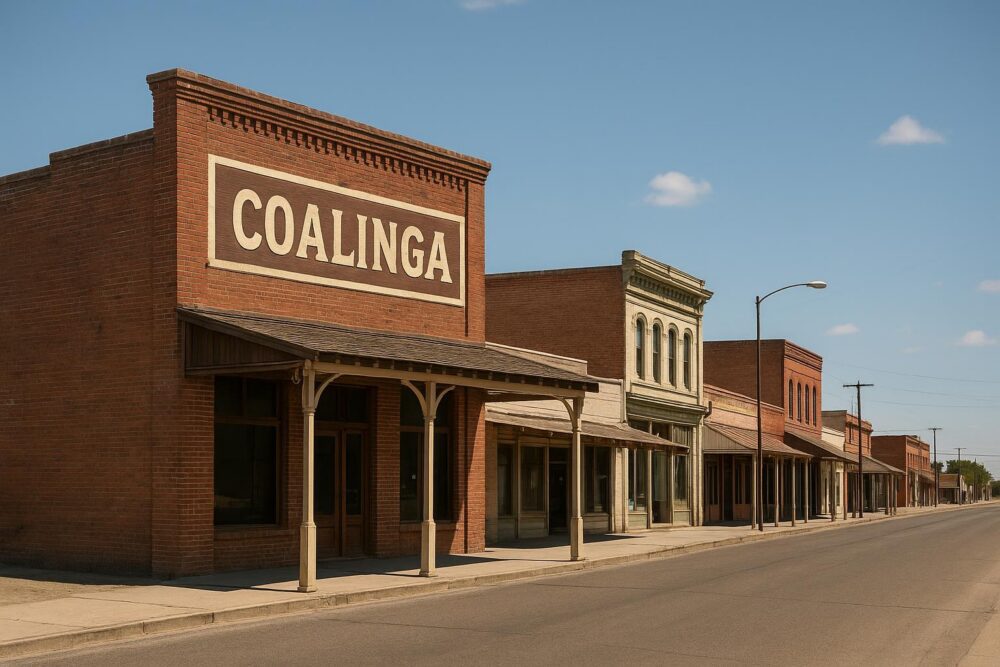
If you like old brickwork and stamped tin ceilings, Coalinga still offers fragments of the late 19th and early 20th century. The courthouse and a handful of commercial blocks show the town’s former ambitions. Many buildings were patched after the quake rather than rebuilt in ornate style, which leaves a plain but telling streetscape: functional, patched, and sincere.
### Memory, Oral Histories, And Preservation
You won’t find grand museums here, but you will find people who remember. Farm families, retired railroad workers, and old-timers in the diner can recite dates and events with surprising clarity. Those oral histories are a big part of coalinga history; they explain why a local street got named for a rancher or which summer produced the greatest flood. Preservation in a place like Coalinga is informal, sometimes messy, and mostly done by individuals rather than institutions.
## The Pulse Of Small-Town Change
Population numbers rise and fall, and economies shift. Yet Coalinga and the surrounding westside coalinga towns keep a steady rhythm: harvest, repair, oil service, school, repeat. That pattern is not glamorous, but it is where the practical history of Fresno County’s west side lives. The town’s story is not a single narrative but a collection of short arcs—rail crews, oil hands, farmers, and families—patched together over a century of weather, markets, and the occasional earthquake.