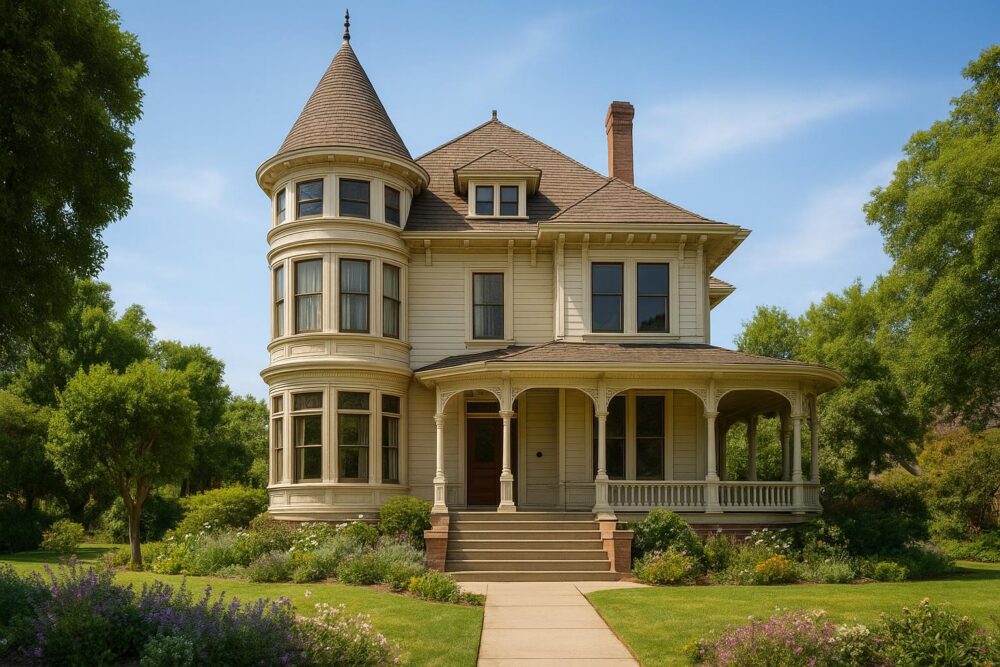
The Meux home stands on a corner that most drivers ignore. Walk past on a Thursday morning and you’ll see a toddler kicking a soccer ball against the low stone fence, a woman taking pictures of the bracketed eaves, a painter tapping at peeling trim. People don’t always know the name, but they feel the shape: a big roofline, deep porches, a sense that someone cared enough to build with attention. That plain fact is the reason the house has mattered to Fresno beyond its lot lines.
## Meux Home Fresno History Shapes Local Preservation
The meux home fresno history isn’t an abstract archive item. It’s a sequence of decisions and arguments about what a neighborhood keeps and what it lets go. In Fresno, that sequence has become visible in restoration scaffolding, in city council hearings, and in the way local volunteers coordinate work days. Those actions grew out of a particular story: a house that almost disappeared and then didn’t.
It’s easy to talk about a single building as an “icon,” but the practical value of the meux home fresno history is less theatrical. It taught people how to negotiate grants, how to document woodwork without destroying it, how to use a public hearing to protect a porch. That expertise spread. Owners of other old properties learned to file applications, take good photographs, and write clear proposals for funding. Small wins accumulated into a group skill set that changed how Fresno handles older houses.
### How A House Teaches Civic Skills
Preservation is often described as nostalgia, but with the Meux house you see something different: civic muscle. Volunteers who once distributed petitions now evaluate paint samples. A neighborhood association that used to fight traffic now argues about period-appropriate window sash. Those small, technical debates matter because they create precedents. They teach judges and planners what “restoration” can look like in Fresno.
One practical lesson came early in the Meux campaign: documentation matters. Before the first contractor scraped a single bracket, volunteers spent evenings photographing every carved detail, every hinge, every failing plaster crack. That inventory was the legal backbone that tied federal grant eligibility to actual physical conditions. Without that work, restoration could have been cosmetic or worse, an ersatz imitation. The record forced specificity.
## Preservation Strategies Rooted In The Meux Home Fresno History
People who study preservation often separate policy from politics. The meux home fresno history ties those threads together. The house showed what happens when an owner is committed but lacks funding. It also showed what happens when a city has flexible tools for incentives. The combination pushed the city to adjust policies.
Local advocates used a pragmatic list of strategies that are now familiar in Fresno preservation circles: tax incentives for qualified rehabilitation, façade easements for key properties, and targeted corridor grants to stabilize clusters of older homes. Those tools are not unique to Fresno, but the way they were applied grew from the Meux example. The home became a test-case for customizing standard preservation programs to local budgets and needs.
### Funding With A Realistic Playbook
Big grants are seductive, but they’re rare. The Meux effort built a funding recipe that mixed modest local money with small private donations and a few state-level grants. That approach reduced project risk. It meant work could proceed in phases: roof first, then windows, then interior systems. With each phase completed, the house was assessed for additional funding. The incremental method keeps the project alive when larger funding streams stall.
Community fundraising also mattered. The preservation group organized bake sales, history walks, and even a single gala that sold a modest number of tickets but generated visibility. Personal donations were small but steady. That steady cash signaled to grant reviewers that the neighborhood cared, which often weighs heavily in competitive awards.
### Skills And Labor: Volunteers, Apprentices, And Contractors
Restoring a historic home requires a mix of professionals and volunteers. The meux home project became a training ground. Local trade schools partnered to give students hands-on experience in carpentry and plaster work. Contractors with preservation experience mentored apprentices. Volunteers learned to remove paint without damaging wood, to document hardware, and to handle fragile stained glass.
That transfer of skills changes a city. When more people know how to work on old houses, maintenance becomes more affordable. Homeowners are less likely to choose demolition because the hands and knowledge to repair exist nearby.
## Why The Meux Home Matters For A Historic Fresno Home Movement
Calling something a “historic fresno home” often means different things to different people. To a lender, it might imply old wiring and risk. To a neighbor, it might mean character and continuity. The meux home helped translate those meanings into policy and process.
Part of the story is visibility. The Meux house sat in a neighborhood that lacked grand civic buildings. It became, by default, a local landmark. Schoolchildren saw it on field trips; neighborhood newsletters ran articles about its restoration. Those touchpoints created a constituency that cares about more than property values. It created a culture that sees older homes as part of a common civic inheritance.
### The House As A Teaching Tool
The Meux project intentionally turned the house into an educational asset. Workshops were held on how to read historic paint, how to stabilize foundations, and how to write grant proposals. Those sessions were practical and gritty, not romantic. People left with spreadsheets, sample photos, and names of dependable contractors.
The format mattered. Rather than short lectures, workshops invited participants to try tasks under supervision. A volunteer might strip a small section of sill to see how much sound wood remained. That tactile knowledge diffused through the community. When another owner faced a cracked gutter or a failing porch, there were neighbors who could say, “I’ve seen this before. Here’s what worked.”
## Architectural Details That Anchor Memory
Part of why the meux home used the word “home” in so many discussions is its architecture. People care about porches and windows because those elements shape daily life. You step onto a porch to greet a neighbor. You look out a bay window at morning light. The Meux house’s features became vocabulary for preservation standards.
Those architectural details also make restoration choices visible and contentious. For example, when the porch columns needed replacement, advocates faced a choice: replace with modern columns that look similar, or commission new columns carved to the original pattern. The group chose authenticity. That cost more but kept the house legible as a product of its time.
### Materials Matter
Preservation isn’t just about style; it’s about materials. The original wood species, the layering of old paint, the mortar in masonry — these things all record craftsmanship and date. The Meux project emphasized matching materials when possible. When modern substitutes were necessary, they were chosen for longevity and compatibility. That’s one reason the house looks “right” to residents who grew up around it.
There were tough decisions. Lead paint removal required care and added expense. Replacing a failing porch floor meant deciding between historically accurate tongue-and-groove decking and a denser modern species that resists rot. Each choice involved trade-offs between authenticity, performance, and budget.
## Neighborhood Effects: Beyond One Block
One house rarely changes a city by itself. The meux home fresno history shows how a single restoration can ripple. Nearby homeowners who watched the Meux project realized that an investment in an older house didn’t mean you’d be stuck with endless repairs. It could increase interest in long-term ownership and encourage modest reinvestment in porches, paint, and landscaping.
That change altered market signals. Realtors who once warned buyers away from “maintenance-heavy” properties began pointing out the growing competence of local craftsmen and the city’s improving support for historic properties. Over a decade, a stretch of blocks that had been in steady decline saw fewer demolitions and more incremental rehabs.
### Zoning, Codes, And The Hard Talks
The Meux campaign also forced conversations about codes. Historic homes were built to an older set of standards that sometimes conflict with modern building codes. The preservation community had to learn to work with code officials, not crusade against them. That meant proposing performance-based compliance: if a historic window couldn’t meet current U-value requirements without losing integrity, the city allowed alternative energy solutions elsewhere on the property.
Those conversations softened the automatic inclination to demand full compliance in ways that would gut historic fabric. A few code exceptions, wrapped in sensible compensations, became standard practice because the Meux example showed how to make a case and measure outcomes.
## Stories That Stick: Oral History And Community Narratives
Buildings hold stories, and the Meux home collected many. Older residents shared memories of holiday gatherings in the parlor or children sledding down a neighbor’s yard when it rained. Those stories gave the preservation effort an emotional backbone. They were used in grant applications and promotional materials, but more importantly, they connected unfamiliar newcomers to the neighborhood’s past.
Collecting oral history is low-cost and high-impact. Tape a neighbor recounting the house’s history, transcribe it, and use a short excerpt in a fundraising appeal. Those snippets humanize preservation. They remind funders and volunteers why a “historic fresno home” isn’t just a building; it’s a collection of lives.
### Living Use Versus Museum Use
A key debate in the Meux project was whether the house should be frozen as a museum piece or remain a lived-in space. The decision to keep it functional made the restoration more sustainable. As a private or community-occupied house, it generates ongoing care and has occupants who notice maintenance needs early. The choice increased flexibility for adaptive reuse: small public events, upstairs rental units, or a community meeting room. Those uses spread costs and keep the house integrated into daily life.
## Replication: How Other Projects Learned From The Meux Example
After the Meux project matured, other property owners asked for guidance. The preservation group put together a short packet: budget templates, sample grant narratives, contact lists for preservation-minded contractors, and a short checklist for when to call a professional. That packet made a difference. It didn’t solve every problem, but it shortened the learning curve.
Replication isn’t automatic. Each property has unique challenges. But the meux home fresno history provided a model: document first, phase work, mix funding sources, and use education to build capacity. When a similar house two neighborhoods over needed help, the owners used that playbook and avoided mistakes made in the earlier project.
#### Practical Steps For Owners Now
If you own a historic property and want to follow the Meux example, start small. Do these things first:
– Document with high-resolution photos and notes.
– Talk to neighbors; build a small support team.
– Prioritize structural stabilization before cosmetic fixes.
– Seek pragmatic, phased funding rather than waiting for a single large grant.
Those steps don’t guarantee success, but they reduce the chance your project will stall or lose its integrity.
## The Politics Of Taste And The Work Of Persuasion
At bottom, preservation is a politics of taste. People disagree about which elements deserve saving and which are acceptable losses. The meux home’s influence came from sustained persuasion, not from unilateral decisions. Advocates who succeeded did three things well: they listened, they provided concrete alternatives, and they offered workarounds that respected safety and health.
That practical approach earned respect. City planners were more willing to entertain proposals because the preservation community showed it could be reasonable about costs and code compliance. That shift in tone, more than any ordinance change, made it possible to protect other historic properties.
A misstep would have been to treat preservation as a moral purity test. Instead, the Meux project emphasized stewardship: do the best you can with what you have, document decisions, and aim for durable, repairable work. That ethos spread through Fresno’s preservation network and changed how people talk about older homes.
## A House That Keeps Teaching
The meux home fresno history remains active. You can still see traces of the early decisions: a repaired cornice here, a repainted cornice there, a new gutter tied into older downspouts. Each small success is practical proof that preservation works on the ground. It doesn’t need monuments. It needs neighbors who know how to identify rot and a city willing to align incentives with long-term care.
There’s no mystic formula. There’s method and patience. The Meux house taught both. It also taught a quieter lesson: that what’s worth saving is not just bricks and brackets but the capacity of a community to take responsibility for its environment. That capacity is the most durable kind of legacy a historic fresno home can leave — and it’s the reason this particular house keeps inspiring people across Fresno to roll up their sleeves and help with restoraion projects near and far.