## Mendota First Post Office Sheds Light On Community Routines
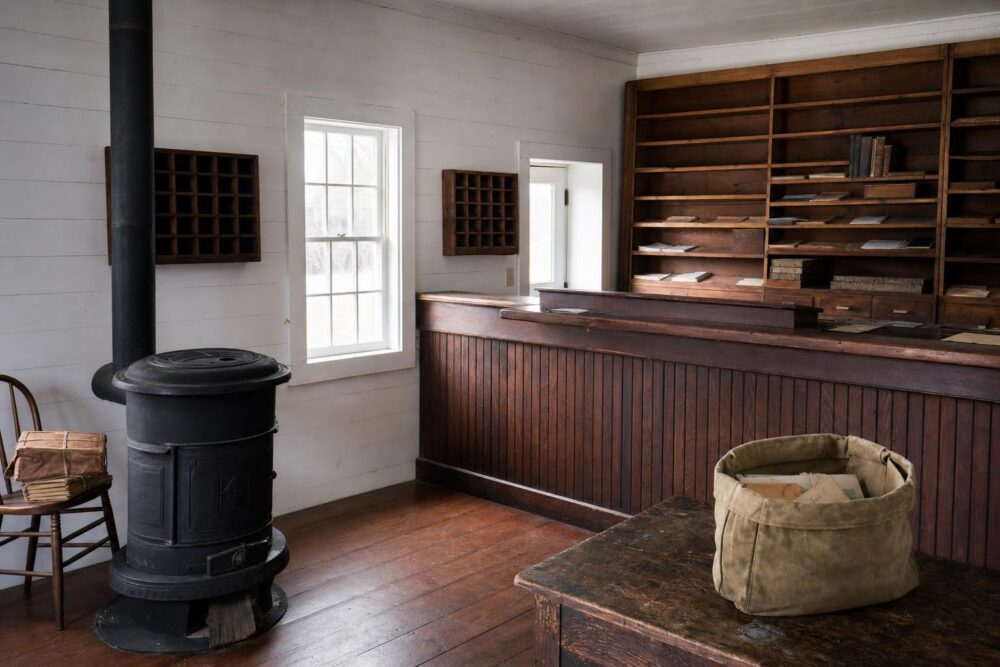
People still talk about the wooden counter with a chipped edge and the ledger tied with twine. The Mendota first post office was small—one room, a back window for packages—but it anchored a town that doubled and halved with the harvest. When local volunteers opened a sealed trunk in the attic of a building slated for renovation, they didn’t find a single spectacular artifact. Instead they found a dozen quiet objects that explain how a place worked: cancelled stamps, fragile envelopes, a brass scale, a crock of cancelled receipts and a list of postmasters’ names. Those bits tell the true story of everyday life.
### How The Building Survived And Was Found
The structure that housed the mendota first post office had been used as a grocery, a feed store and, for a while, a private garage. That’s how the space stuck around—reused rather than demolished. A contractor tearing off an old roof found layered newspapers and, tucked inside a ceiling cavity, a stamped envelope from 1873. The envelope prompted a search that led to the attic trunk and a cross-checked ledger in city hall. Simple, physical evidence gave history form.
### What The Items Tell Us About Mail And Movement
Letters and packages reveal patterns. In the mendota first post office records, weekday deliveries were short and intense; Saturday mornings had a rush. Farmers signed for seed orders in June and hay equipment in July. The ledger tracks seasonal spikes, showing how mail volume mirrored planting and harvest cycles. A post office wasn’t abstract infrastructure. It was the town’s pulse monitor.
Mail routes in the ledger were handwritten with mileage notes. Postmasters tracked the cost of horse feed next to postage receipts. Those margins tell an unvarnished truth: moving letters was logistical work, tied to weather, roads and the availability of horses. When a local sawmill shut down in 1894, the ledger shows fewer wood shipments and an uptick in newspapers coming in by rail. You can see the town reshaping itself in ink.
#### Postmasters, Politics, And Patronage
Local postmasters were often small-business owners or prominent farmers. The role wasn’t just delivering letters. It was political and social. The list of names in the Mendota ledger shows appointments that match local election cycles. A postmaster change often coincided with a new sheriff or council majority. These appointments mattered because the office was where people asked questions, lodged complaints, and sometimes negotiated favors. The mendota post office became a node of authority as well as convenience.
#### Stamped Impressions: Postal Practices Revealed
Stamps and cancellations are more than pretty designs. They show which routes carried mail and what rate applied. Some cancellations in the trunk were smudged, suggesting damp journeys. A partial postmark showed a stop that doesn’t exist on modern maps; volunteers cross-referenced a county atlas and found an old station name. Suddenly, an obscure hamlet reappeared. That’s the kind of detective work that makes mendota postal history useful beyond local nostalgia.
### Voices From Letters: Small Details, Big Stories
People wrote about weather and crops, but also about weddings, migration and loss. One letter from 1881 is a single page of cramped handwriting asking a sister in another state to send seeds and news of a cousin. Another letter, sealed with wax, carries a brief apology from a man who missed his train. Those private notes show how ordinary mail knitted families together across distance. When historians study mendota postal history, they’re not just cataloging envelopes; they’re tracing relationships.
### The Community Reacts To Rediscovery
Local high school students helped sort the collection. They were surprised by the sheer volume of junk mail from 1900s publishers, and by how many packages came wrapped in old catalogs. Some elders remembered the building; others had tales about a quirky postmaster who insisted on personally delivering letters to certain widows. Oral histories combined with the physical records added texture. The discovery turned into a community project: cataloging, conservation, and an exhibit planned at the county museum.
#### Conservation Choices And Curatorial Tradeoffs
The team had to decide what to stabilize, what to digitize, and what to store under climate control. Fragile envelopes were flattened and rehoused. Stamps were photographed at high resolution and then scanned. Paper conservators recommended leaving certain staples because removing them would cause more harm. There are always choices—what gets spotlighted and what gets archived. Those decisions shape how future visitors will interpret mendota postal history.
### Why Small Post Offices Matter Historically
National histories tend to highlight big hubs and famous inventors. Local stories show how systems actually worked. The mendota post office scaled down the national network to human size. It’s possible to track the ripple effects of telegraph lines, rail connections and road improvements through the tiny details in the ledger. For example, after a rail spur arrived nearby, the ledger records a sudden decrease in local long-distance postage costs. New infrastructure recalibrated daily life.
### Visiting The Exhibit And Reading The Records
The county museum plans to display the ledger, a selection of letters, and a reconstructed counter from the mendota post office. They’ll also provide digital copies so people who moved away can read the letters their relatives wrote. The staff is building a searchable index that ties names to addresses and to the ledger’s route notes. That will let genealogists and curious locals follow specific people through time.
#### How To Use These Records For Research
If you’re tracing a family thread, start with the ledger’s name entries and match them to census records. The post office list gives dates of service, which can be used to confirm a person’s residence at a particular time. Mail routes show where people expected to receive goods, which hints at commerce patterns. Even utility: the presence of a repeated Post Office Money Order suggests regular remittance habits. These are small clues that open larger questions.
### The Mendota Post Office In Modern Memory
Today’s Mendota post office is a different animal—automated, larger, and part of a national system far more complex. Yet the local memory of the mendota first post office persists. People still recall the smell of ink and coal soot, the way parcels were stacked for pickup, and the phrase “It came this morning.” There’s comfort in that concrete vocabulary. It’s proof that infrastructure is not just metal and policy; it’s a set of practices that people inhabited.
Artifacts have a blunt power. A cancelled envelope can pull a century into a room. The mendota first post office doesn’t change national narratives, but it fills in gaps. It teaches how mail mattered in everyday life, how postal routines interfaced with work and family, and how a small institution can reveal a town’s shape. The trunk’s contents are modest, sometimes cracked, and a little reciept-stained. They’re also honest history, close enough to touch.