## Fresno County Post Office History: A Map Of Change
The fresno county post office history is a tangle of maps, receipts, and people. You can trace a town’s rise or decline by its postmark. That’s not a metaphor—look at where routes once ran, and you’ll see why a siding grew into a town, or why a cluster of farms stayed small. The paperwork left behind tells a local story that county land deeds and census rolls miss.
Postal records are practical things: application forms for post offices, lists of postmasters, route descriptions, and repair bills. Those dry items, when read right, turn into a neighborhood biography. This is not romanticizing the system. It’s pointing out that when the mail came daily, communities had a rhythm. When the mail stopped, something else shifted.
### Early Routes And Relay Stations
In the 1850s and 1860s, routes were a patchwork. Stage lines connected Fresno County to Stockton, Visalia, and the coastal towns. Before railroads consolidated travel, a post office was often the only link to the outside world. Families timed shipments for a day the stage would pass. Farmers planned sales around it.
Rural Free Delivery changed everything in the early 1900s. Suddenly mail runners were no longer tied to a town center. The RFD routes carved up the countryside. Small hamlets that had leant their identity to a general store struggled to compete with the convenience of direct delivery. Many of those micro-post offices in schoolhouses and corner stores quietly closed. That shift is central to any serious post office history of this county.
#### Postal Architecture And Small Town Identity
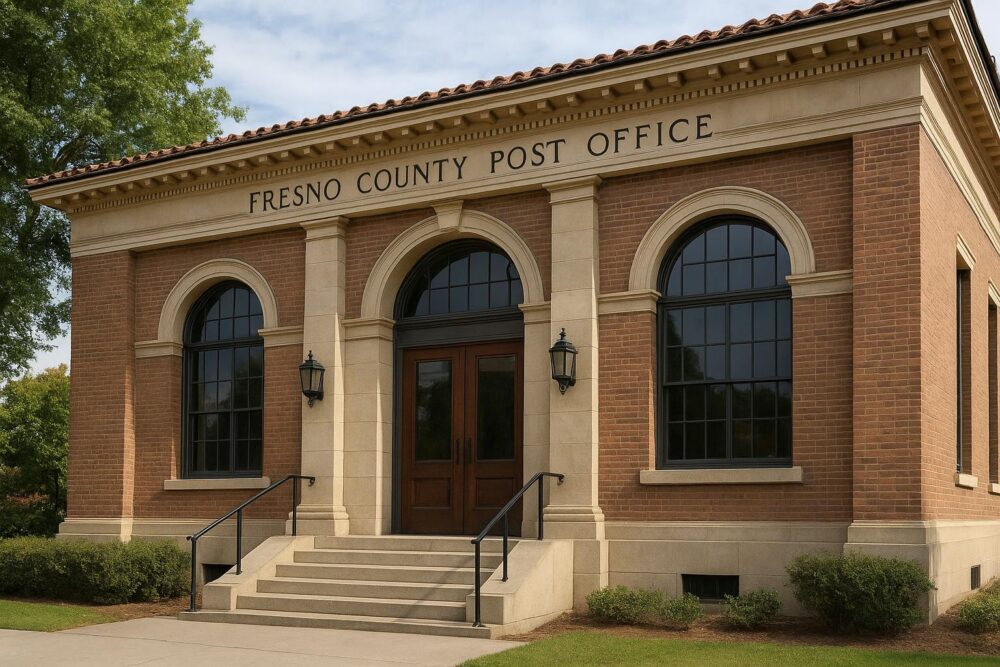
A post office building is more than brick and counter. In places like downtown Fresno or Clovis, the post office anchored a block. The facade mattered. A confident stone entrance said the town had staying power. In other towns, the post office sat above a storefront or in a modest one-room building. Those differences show local priorities and budgets.
New Deal projects in the 1930s left their mark, too. Federal investment built or remodeled several county post offices, often with murals and simple classical details. Those projects brought jobs and a sense of permanency. If you wander into an older lobby and notice a mural or a tile floor, you’re looking at a decision to make a federal presence feel local. That’s the kind of detail that keeps historians awake.
### How Records Tell Different Stories
Search the archives and you’ll find routine filings next to passionate petitions. A handwritten plea from a postmaster asking for longer hours can sit beside a farmer’s letter demanding a route change so crops reach market. These documents record how people negotiated daily life.
To study the fresno county post office history you need to read across several collections: county records, National Archives postal files, and local newspapers. Newspapers are especially useful because they cover the human response—grand openings, protests over closures, and the occasional scandal when a postmaster was accused of favoritism. The combination of official and civic sources gives texture to what otherwise would be a skeletal timeline.
#### Postmarks, Ledgers, And Oral Accounts
Postmarks are tiny proofs of movement. Their dates and styles can confirm when a station was actually operating. Ledgers record fees, stamps sold, and money orders—evidence of the economic life around a post office. Then there are the stories people tell. I remember a farmer in a valley who described the post office as the place to hear what neighbors were selling that week. That anecdote illuminates the ledger. Together, these sources reconstruct a neighborhood’s tempo.
### Forgotten Branches And Their Stories
Some Fresno County post offices existed for only a few years. Others lasted a century. Take a place that opened as a siding on a rail line, spiked into being by a wheat boom, then faded when markets shifted. Those now-missing offices leave behind a handful of receipts and a faded sign nailed to a barn.
People tend to think preservation equals big buildings, but small branch histories are often richer. The story of a shuttered boutique post office in a farming crossroads can tell you about migration patterns, irrigation projects, and the consolidation of services into larger towns. Looking at a single tiny branch can show the same forces that built metro areas.
#### The Case Of A Closed Station
There’s a pattern: a community petitions for postal service, gains a contract station in a general store, the postmaster is a storekeeper, RFD arrives, and then the station closes. That arc repeats. One station I researched operated out of a mercantile perched beside a dusty highway. When a nearby highway was paved and traffic reoriented, the owner moved on. The post office ceased to be a social hub. People adapted, but the local landscape changed.
## Mapping Fresno Post Offices Through Time
Maps matter. Old postal route maps are like geological cross-sections of daily life. They show the arteries and veins of communication. Overlay a 1905 postal map with a 1950 road map, and you can see the shift from stage and rail to trucks and highways. That comparison is crucial to any fresno county post office history.
Clovis, Sanger, Kerman, and other towns each show different patterns. Some grew around agriculture and irrigation; others expanded with industry or as bedroom communities. The placement of post offices both followed and shaped that growth. Mapping these offices at different moments reveals where investment flowed and where it dried up.
### Government Policy And Local Adaptation
Policy decisions from Washington shaped local choices. The creation of Rural Free Delivery, parcel post, and changes in carriage rates all affected how frequently mail moved and how people used it. Add in the Postal Reorganization Act of 1970 and you have a government entity trying to operate more like a business. Those shifts had real consequences in Fresno County.
Local actors responded creatively. Some communities established contract stations in butcher shops, bakeries, and restuarant-turned-general-stores. Others lobbied for cluster boxes or relocated services to a nearby larger town. You learn a lot about local politics from those choices: who got to keep federal presence and who lost it.
#### WPA Projects And The 1930s Build-Out
During the Depression, post office projects provided local employment and civic pride. The Treasury Department’s architecture program commissioned murals and built streamlined lobbies. Those buildings often served multiple purposes—mail, federal paperwork, and community noticeboards. While not every town received such a building, the ones that did left physical reminders that the federal government had once invested in local infrastructure.
### Why Post Office History Matters Today
Postal history isn’t nostalgia for its own sake. It helps explain current access issues and what residents value. When a rural post office closes, residents often lose a place for bill payments, pensions, and a sidewalk check on neighbors. Today’s debates about closures and service levels feel new, but they echo past conflicts over routes, contractor stations, and federal spending.
For historians, planners, and neighborhood activists, fresno county post office history is a toolkit. It highlights patterns of connectivity, shows the impact of infrastructure decisions, and reminds us that services are more than conveniences. They are part of a social fabric.
#### Preservation And Memory
Some post offices deserve preservation because of architecture or art. Others matter because the local memory is attached to them. Preservation work can be small: documenting a postmaster’s ledger, digitizing old mail routes, or recording residents’ recollections of the lobby conversations that once stitched communities together.
Archivists increasingly scan and share postal records online. That makes local research possible for people who can’t travel to the National Archives. Still, the best finds often happen when someone shows up in a county clerk’s office with a shoebox of letters. Those small discoveries are the ones that reopen conversations about place and belonging.
### An Ongoing Project
Studying the fresno county post office history is less like completing a checklist and more like assembling a quilt. Each patch is a record, a photograph, a rumor, or a ledger entry. Stitch them together and you get a broader picture of how people and places connected. The work is ongoing because communities keep changing, and new records crop up in attics and sale bins.
If you want to dig in, start local. Ask an older neighbor who remembers collecting mail at a rural box. Visit the county archives. Cross-reference postal schedules with local newspapers. You don’t need specialist training to notice the patterns. Once you start, it’s hard to stop noticing how mail shaped the day-to-day life of a county that still surprises people with its hidden layers.