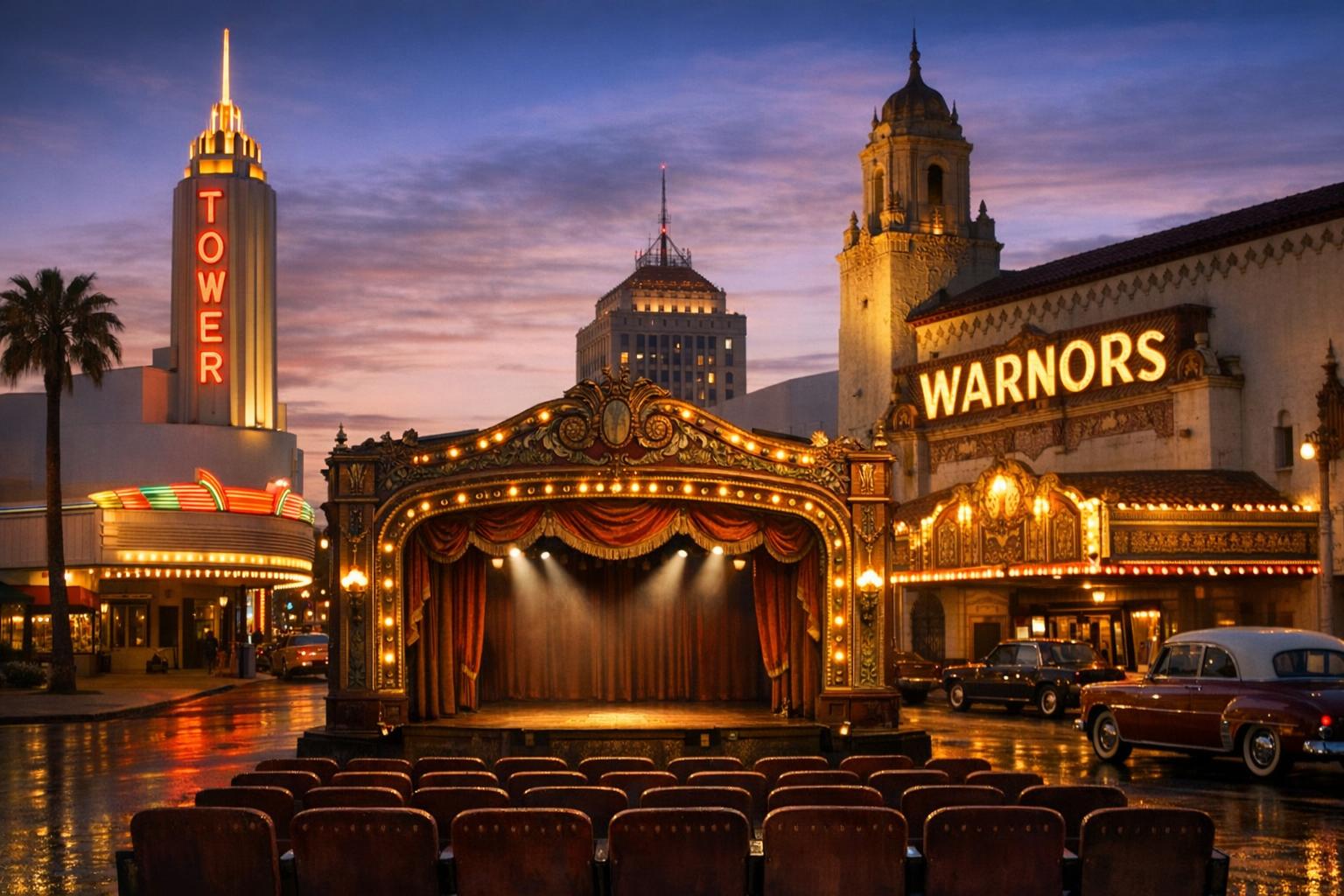
Walk into the Tower District on a Friday night and you still hear the same thing: someone calling out the name of a movie in the lobby, the soft clink of coins at the concession stand, and the organ hum from a film that predates most people in the room. Those sounds are the city talking to itself. They’re small pieces of how Fresno remembers theater—not just as entertainment, but as a public habit.
## Fresno Historic Theaters: Backstage And Bricks
People misunderstand preservation. They picture a building sealed in amber. The truth is messier: preservation is negotiation. It’s the Warnors marquee glowing again after rooftop work, it’s the Tower Theatre switching from a single screen to a flexible arthouse venue, it’s the city choosing to buy a building rather than let it turn into condos. These are the practical choices that keep the lights on.
The phrase fresno historic theaters points to a handful of places that have outlived their first owners, their original ticket prices, and several waves of urban planning ideas. Each one survived because a coalition of volunteers, business owners, and technicians decided that the way a place looks and sounds matters. That’s why the William Saroyan Theatre, Warnors Center, and Tower Theatre pull different crowds on different nights. They’re not replicas of the same idea; they’re distinct rooms with separate social lives.
### The Theaters And Their Personalities
Theaters age like people. The Tower is the scrappy younger sibling — smaller, less formal, fond of movies that ask questions. Warnors puts on the kind of shows that draw the hometown crowd: touring Broadway productions, local symphony dates, benefit galas. The Saroyan is quieter, designed with a sense of civic gravitas that makes it the natural venue for official openings and symphonies.
Each place has architectural fingerprints. You notice them in the tilt of a balcony, the thickness of a wall that muffles city noise, or the way a proscenium frames an actor’s face. Those details change how performances land. A singer at the Saroyan hits a note and it hangs differently than it does in a small downtown picture palace. That difference affects programming choices — which artists are invited, how a stage is built, whether a show can tour there.
### How Programs Shape Memory
When a theater brings in a touring musical, it becomes a memory marker for a generation. People who saw Phantom at Warnors might tell you exactly where they sat and what the curtain smelled like. Sometimes small productions matter just as much: a local playwright premiering a new piece can cement a theater’s role in nurturing local culture. Fresno theaters succeed when programming mixes national acts with homegrown artists. It’s how these buildings stay relevant without losing character.
## The Long Road From Neglect To Revival
Cities go through cycles. In the mid-20th century, many downtown theaters lost audience share to suburban multiplexes. Fresno was no exception. For years, marquee lights dimmed. But revival didn’t start with a grand plan; it started with a handful of people who cared enough to clear out debris, lobby for funding, and learn a new set of skills: grant writing, seismic retrofitting, and historic tax credit navigation.
There are technical hurdles too. Older theaters often need modern HVAC, accessible entrances, and theater rigs that meet current safety codes. Upgrading for those needs can be brutally expensive. You don’t just restore plaster; you rewire decades of layered systems. That’s part of why public-private partnerships mattered: municipalities that put in matching funds made it easier for nonprofits to qualify for larger grants.
### Funding Models That Worked
Fundraising in Fresno didn’t follow a single template. Some theaters relied on large philanthropic gifts; others grew from grassroots membership drives. Building a sustainable plan means matching the restoration timeline to the operating budget. If you fix the roof but don’t address long-term programming and staffing costs, the building will wait for the next emergency. The places that made it through learned to treat maintenance as ongoing work, not a one-off project.
#### Practical Preservation Steps
– Invest in a realistic master plan before major work begins.
– Prioritize infrastructure that enables revenue: accessible seating, modern restrooms, and reliable box office systems.
– Train local volunteers in basic maintenance tasks to reduce overhead.
– Use phased work to keep parts of the building active during restoration.
## Why These Theaters Matter Beyond Nostalgia
Historic places do more than remind us of the past. They anchor neighborhoods. When a marquee lights up, restaurants nearby stay open later. Small hotels and shops benefit too. This is about an economic ecology: arts venues draw people who spend money, which keeps blocks alive at night instead of empty and unsafe. That matters in urban renewals where the goal isn’t to make a museum of the past but to keep streets functional and lively.
There’s also a civic value. Theaters offer neutral ground where people of different backgrounds share an experience. That shared experience can be surprisingly powerful. A benefit concert, a debate, or a classical concert brings together people who wouldn’t typically meet in other settings. Those collisions are part of how community cohesion forms.
### People Behind The Projects
Restoration is a social enterprise as much as an architectural one. In Fresno, volunteers are the unsung labor: people organizing ticket sales, building sets, painting murals, and cataloging old photos. Board members negotiate with city officials and lenders. Technicians relearn analog projection because sometimes that’s what a historic film demands.
The staff often wear multiple hats. A house manager might handle concessions and run spotlights. A marketing director might double as a fundraiser. Those hybrid roles are practical: historic theaters rarely have the budgets of modern chains. But the upside is a tight team that understands the place intimately.
## Programming That Keeps Seats Filled
Programming isn’t a guesswork exercise. Successful Fresno theaters read their neighborhoods. If a venue sits in a district with a strong immigrant community, bringing films and shows that speak to that group increases attendance. If a theater sits near college campuses, late-night screenings and experimental art will draw students. The best programming mixes crowd-pleasers with risk.
A tricky balance: sell enough tickets to pay the bills, while maintaining a mission that values art that might not sell out. Subscription models help. Season passes create reliable income and build a devoted base. Single-ticket events, however, are where theaters find new audiences. That’s often where community outreach programs do their work — hosting school matinees, offering discounted youth tickets, and collaborating with local artists.
### Tech Upgrades Without Losing Character
Keeping a historic theater relevant means adding technology where it tangibly improves the audience experience. Digital projection, upgraded sound, and lighting rigs allow more types of shows to pass through the stage. But upgrades shouldn’t erase the acoustic warmth or the sightlines that define historical charm. The goal is a hybrid approach: modern backend systems, classic audience experience.
#### What To Expect When You Visit
– A range of seating options: orchestra stalls that hug the stage and balconies that give a panoramic feel.
– Variations in acoustics from room to room; not every space favors amplified pop music.
– An emphasis on small, local touches — volunteer-run bars, locally sourced concessions, and sometimes handmade program books.
## How To Support Fresno’s Theater Scene
Supporting historic theaters isn’t limited to giving money. You can come to shows, recommend performances to friends, volunteer, or work behind the scenes. Buying a season ticket is an easy, direct way to help. Donations fund immediate needs; membership funds future programming.
Advocacy matters too. City budgets are often where the critical decisions happen. Citizens who speak up about cultural funding influence whether these theaters can afford needed retrofits. Preservation also thrives when developers understand the value of integrating old theaters into new projects, not tearing them down.
### Small Ways To Make A Big Difference
Show up to events early and spend in the lobby. Offer pro bono services if you have skills the theater lacks. Talk to local businesses about cross-promotional partnerships. These things build the small revenue streams and networks that become lifelines during lean times.
There’s work left to do. Fresno’s collection of historic theaters will keep changing. Some will become more deeply integrated into city life. Others may hunker down as niche venues. But the thread that runs through all of them is human: people who insist these rooms deserve to stay active. That insistence is what turns empty stages into community stages again — often by sheer will, craftsmanship, and the occasional generous donor who remembers a first date under a marquee.
If you want to understand the city, see a show in one of these rooms. Sit close. Listen. Notice the way the light hits a plaster relief. And when you leave, tell a friend. Support doesn’t have to be huge. It just has to be consistent to keep this fragile, glorious ecosystem alive in Fresno’s downtown and neighborhoods. It’s where the past meets a present that still wants to gather and witness. Teh rest follows.